
Let's talk about what actually kills intimacy
It's not toys. It's silence. It's the unspoken thing sitting between you both, the desire you're not mentioning, the frustration you're pretending isn't there. Most couples don't break apart because of what they're doing. They break apart because of what they're not saying.
A lemon vibrator changes that conversation. Not because it magically fixes things, but because it gives you permission to talk about pleasure when you've been talking around it for years.
Why couples avoid this conversation
Here's what I hear in my practice over and over: "I don't want my partner to think I'm not satisfied." "If I bring up a vibrator, they'll feel like I'm rejecting them." "What if they think it means they're not enough."
Those fears are legitimate. They're also almost never what happens.
What actually happens is relief. Because your partner has been wondering the same thing. They've been sensing that something's shifted in your sex life, that you're less present, less vocal, less there. They've been waiting for you to say something. When you finally do, it's not a rejection. It's an invitation.
The three-part setup that works
Don't ambush this conversation. Don't bring it up mid-sex or during an argument. Pick a calm moment, ideally not in the bedroom.
First: Make it about both of you, not about lack. Say something like, "I've been thinking about how we could feel more connected during sex." Not, "I'm not getting enough." The framing matters because it shifts the conversation from complaint to collaboration.
Second: Show them the toy first, outside the bedroom. Let them hold it. Let them see it's not intimidating. A lemon clitoral vibrator is beautiful and portable and designed to enhance sensation, not replace anything. Most partners' first reaction is curiosity, not defensiveness, once they see it's not a threat.
Third: Be specific about what you want. "I'd like to use this when we're together because I think it'll help me feel more pleasure, and I want you to watch" or "I want you to hold it while I tell you what feels good." Specificity removes ambiguity. Ambiguity breeds anxiety.
The first time using it together
Set expectations beforehand. Don't just turn it on and see what happens.
Most couples who struggle with this are starting from a place of disconnection or routine. Your first experience should be explicitly about rebuilding presence, not about orgasms. I recommend starting with one of you using the lemon vibrator while the other provides touch elsewhere: kissing, hands on the back, stroking your arms. Keep talking. Tell them what you're feeling. Ask them what they notice. This isn't performance. It's exploration together.
The lemon clitoral vibrator creates a focused sensation that often lets you feel more, not less. That heightened sensation actually gives you more to share with your partner. You're not disappearing into your own experience. You're in a heightened version of it, and you're bringing them in.
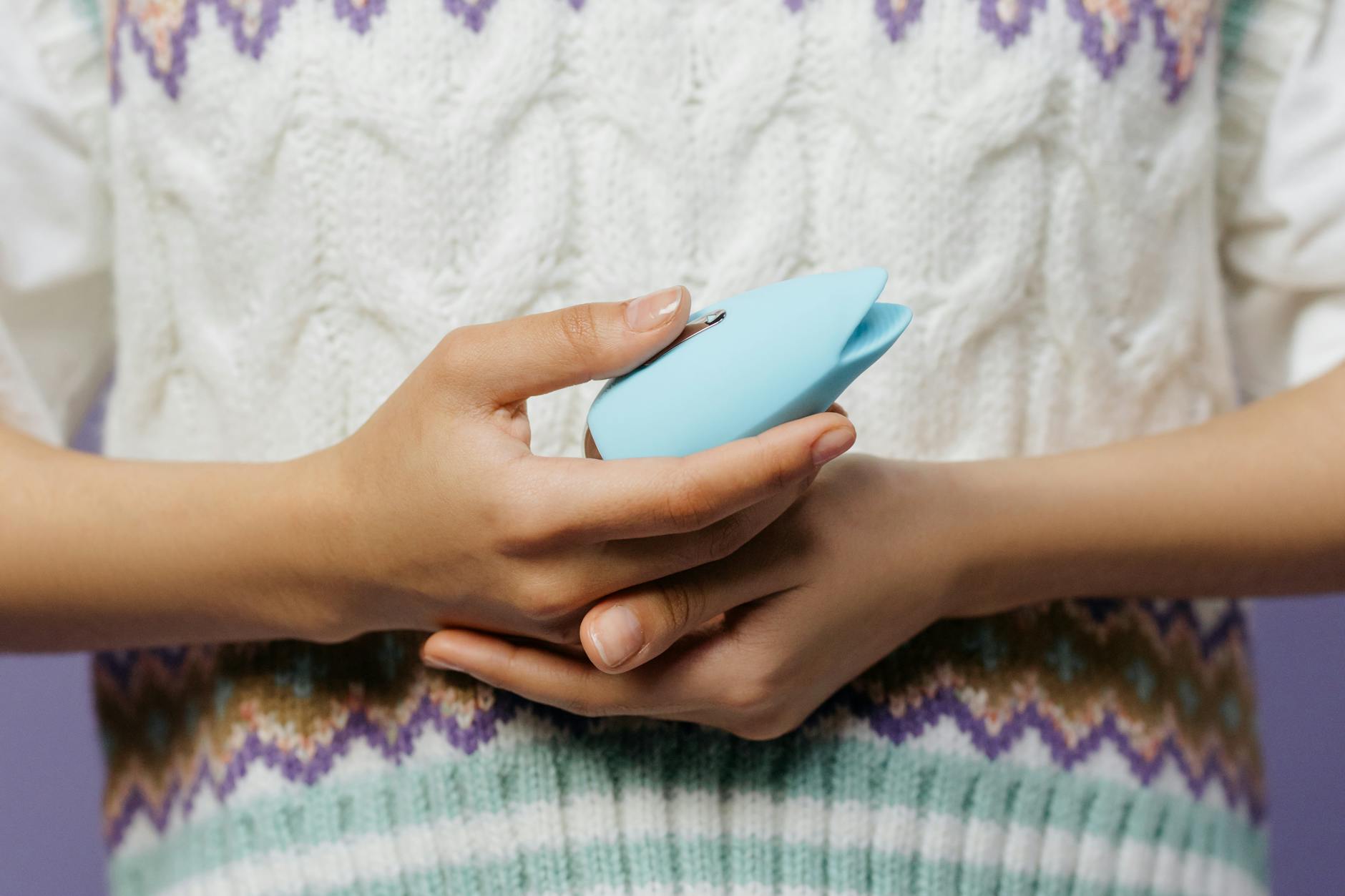
Photo by cottonbro studio on Pexels
What changes when you stop hiding
When a partner knows you're using a lemon vibrator and chooses to participate, something shifts. Sex stops being a thing that happens to you in isolation and starts being something you're doing together. That's the opposite of distance. That's intimacy.
I've worked with couples who introduced a toy specifically to rebuild connection after years of just going through the motions. They report three consistent changes:
First, more communication. Once you've named what you want, you'll name other things too. Preferences. Boundaries. Fantasies. The vibrator was just the first conversation.
Second, less resentment. A lot of relationship friction around sex comes from unmet needs that no one's saying out loud. When you bring in a tool that helps you feel more pleasure, you stop resenting your partner for not being enough. You're not blaming them for your body's limitations anymore.
Third, more play. Couples tell me they laugh more, try new positions, actually experiment. The toy removes the pressure of performance. You're not trying to force an orgasm through friction alone. You have space to be curious.
When to involve your partner in choosing it
If you have the emotional bandwidth, shop together. Let your partner see the colors and the sizes and the intensity levels. Let them ask questions. This isn't secret territory. It's shared.
If you're not there yet, that's fine. Buy it yourself. Use it alone first. Get comfortable with your own pleasure. Then bring your partner in when you're ready. There's no timeline here.
The conversation after the first time
Don't skip this. Ask your partner what they noticed. Ask what felt good about it. Ask if there's anything they'd want to change next time. This is where intimacy actually deepens. Not during sex. During the debriefing.
If your partner seems hesitant or distant afterward, don't assume that means it didn't work. They might need time to process. They might have feelings they're sorting through. Give them space, but also give them permission to talk about it. "I noticed you seemed quiet. What was that about for you."
When a partner resists
Sometimes they do. Sometimes the conversation goes sideways. This is where you need to be clear about what you actually need.
There's a difference between "I'm not comfortable with this yet, let's talk about it" and "I don't want you using toys at all, ever." One is negotiation. One is control. You get to choose which conversations you're willing to have and which ones indicate a bigger incompatibility.
If your partner is willing but anxious, reassurance helps. Show them how the lemon vibrator works. Explain that you're not comparing them to it. You're adding to what you already have.
If your partner refuses altogether and you've already decided this is important to you, that's information you need to sit with. You might need to talk to a couples therapist. You might need to make a different choice about what you need.
Building on it
Once using a lemon clitoral vibrator together feels normal, other things become easier to explore. Different positions. Different rhythms. More vulnerability. The toy was never the point. The point was breaking the silence.
Lots of couples find that after introducing a vibrator, they start initiating more. They feel more desire. They feel more seen. Because sex stopped being a obligation and started being a conversation.
The long game
Intimacy isn't about always having perfect sex. It's about being present with another person and letting them be present with you. Sometimes that looks like pressure and orgasms and intensity. Sometimes it looks like slowing down, using a lemon vibrator, and noticing what feels good without rushing toward a finish line.
A toy doesn't fix a broken relationship. But it can be the first honest conversation in a stalled one. And that conversation might be exactly what you both needed.
People also ask
Can using a lemon vibrator make my partner feel less important or needed?
No, but that fear is worth taking seriously. Talk about it directly. A lemon clitoral vibrator isn't competing with your partner. It's enhancing what you already have together. Think of it like wine with dinner. The wine doesn't make the meal less good. It makes it taste different. Your partner still matters. They still matter differently than a toy. They matter because they're a person, not because they're your only source of pleasure.
Should I use the vibrator alone before introducing it to my partner?
Yes, probably. Get familiar with how it feels, what patterns you like, where the sweet spot is. This removes performance anxiety from your first time together. You'll know what to expect, so you can focus on your partner's presence instead of figuring out the device. Plus, knowing exactly what you want makes the conversation easier. "I like pattern three at medium intensity" is clearer than "um, I like the vibrations."
What if my partner wants to use a lemon vibrator on me but it feels too vulnerable?
Vulnerability is uncomfortable. That's its job. You might feel seen in a way you haven't been before. That's not bad. That's the actual intimacy part. Start with lower intensity. Start with clothes on if you need to. Let your partner know that you might feel nervous and that's okay. Most couples find that the nervousness fades after the first time. By the second time, it feels normal.
How often should we use it?
There's no rule. Some couples use a lemon vibrator during every encounter. Some use it occasionally. What matters is that you both feel good about it. If you're using it and your partner resents the time it takes, that's worth discussing. If you're using it and you both feel connected, use it as much as you want.
Can a lemon vibrator help if we've been disconnected for years?
It can be a starting point. But it's not a magic fix for deep disconnection. If you've been distant for a long time, you probably need more than a toy. You might need to talk to someone, separately or together. A vibrator can help rebuild physical intimacy. It can't fix communication patterns or deeper trust issues on its own. But it can be the bridge that gets you willing to have the harder conversations.
What if we use it and nothing changes?
Then you've learned something. You've learned that the disconnection isn't just about physical pleasure. This is valuable information. It means you might need a different kind of help. A couples therapist, a longer conversation, a different approach. At least you've tried something and you know where the real work is.
Intimacy is built in layers. Sex is one. Conversation is another. Vulnerability is another. When you introduce a lemon vibrator and actually talk about it, you're building all three at once. That's how you feel closer to your partner. Not because of what the toy does. Because of what it makes you brave enough to say.
If you're ready to start this conversation, start small. Start honest. Your partner is probably waiting to hear it.