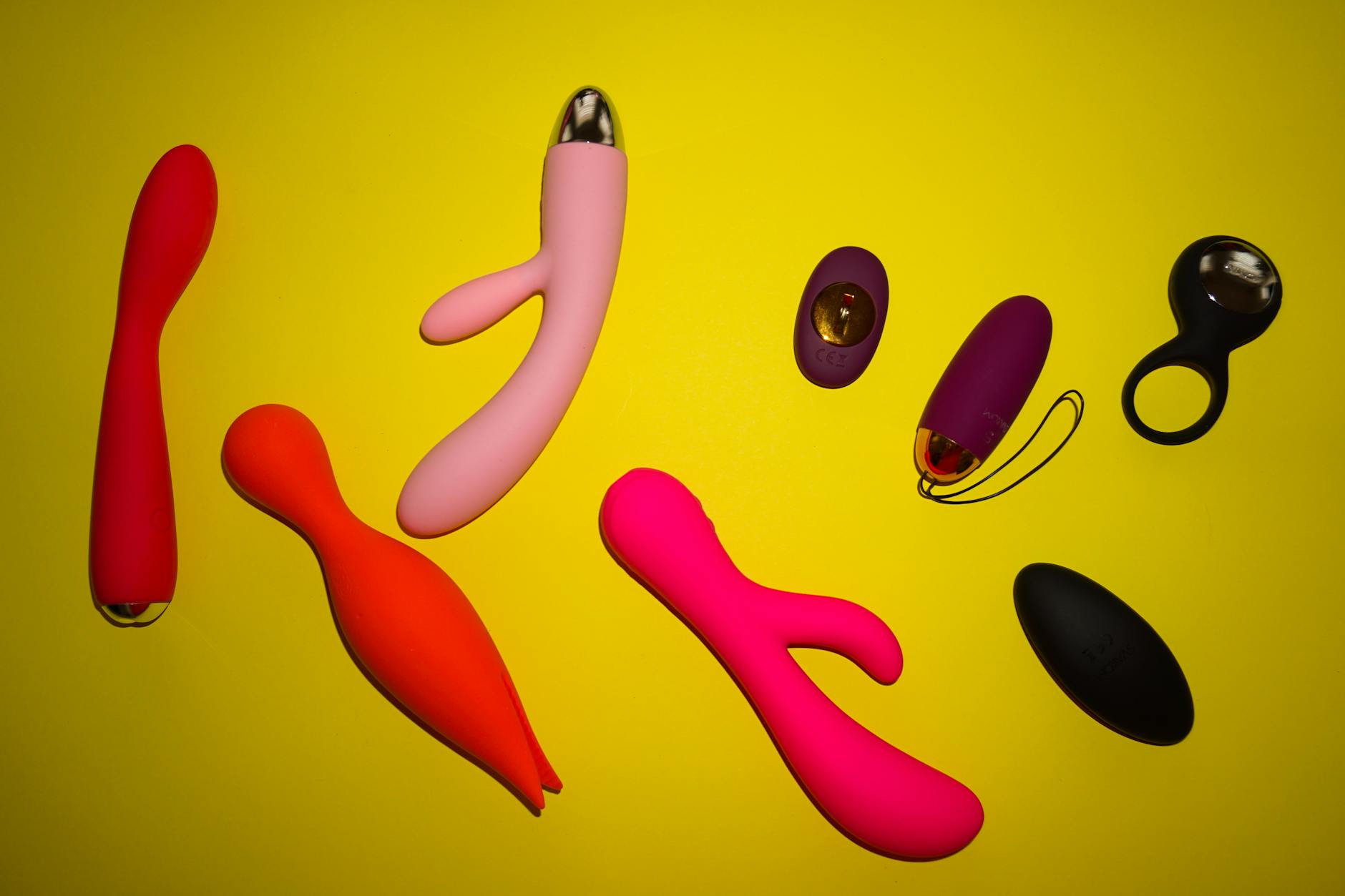
Let's talk about slow arousal
Here's the thing nobody tells you: arousal is not a binary state. You're not either turned on or you're not. For a lot of people, especially as they get older or after certain life events, arousal is more like a dimmer switch than a light switch. It builds gradually, peaks slowly, and needs room to breathe.
That doesn't mean something is broken. It just means your body has a different tempo than the cultural default we all grew up with.
Why arousal builds slowly sometimes
Several things can make arousal creep in gradually rather than arrive all at once. Age is one. Stress and relationship patterns are another. Medication, hormonal shifts, and even how much headspace you have that day all play a role. Some people's nervous systems are wired this way from the start. The good news: once you understand your own rhythm, you can work with it instead of against it.
A lemon clitoral vibrator is particularly useful here because it gives you precise control over how much sensation reaches your body at each stage. You're not locked into one intensity the way some toys are. You can start gentle, stay there as long as you need, and gradually turn up the patterns without jarring yourself out of the moment.
Start before you think you're ready
This is the counterintuitive part. If your arousal builds slowly, you want to begin stimulation when you're maybe 20 percent interested, not when you're 80 percent ready to go. Your body needs the time to respond, and the lemon vibrator's job is to help that response unfold.
Set aside 30 to 45 minutes minimum. Not all of it will be active play. Some of it will be stillness, building anticipation, letting your nervous system register what's happening. This is not wasted time. This is how your body learns to trust the process.
The opening phase: patterns one and two
When you first use your lemon clitoral vibrator, stick to the lowest patterns. The Lem has several settings, and most people with slow arousal need to spend 5 to 10 minutes in pattern one before anything interesting happens. This feels boring. That's actually the point. You're not trying to feel amazing yet. You're trying to signal to your nervous system that it's safe to respond.
Place the vibrator gently and don't press. Just let it hover. Move it slightly side to side. The sensation should feel present but not urgent. If pattern one feels like nothing is happening, you're probably doing it right. Stay there. Your body is paying attention even if your brain doesn't feel the difference yet.
After a few minutes, move to pattern two. Still gentle. The difference between one and two should feel incremental, not dramatic. You're layering sensation, not replacing it. This is where people usually start noticing a shift in their attention or breathing.
The building phase: patterns three through five
When you feel a small shift toward more interest, move up one pattern. Not two. One. Give yourself 3 to 5 minutes at each level. If you jump too quickly, you might overshoot the slow-build groove your body is in and end up feeling numb or anxious.
During this phase, your job is to notice what's changing. Maybe your breathing deepens. Maybe your pelvic floor starts to respond. Maybe arousal itself still feels distant but your clitoris is becoming more sensitive. All of these are signs that the arousal is building exactly as it should.
A lot of people with slow-building arousal worry they're taking too long or doing it wrong. Neither is true. You're not broken. You're not inefficient. You're in a different arousal arc, and the lemon vibrator is helping you honor that arc instead of fighting it.
The sustained phase: building deeper sensation
Once you've reached pattern five or six and you notice genuine pleasure starting to crystallize, slow down your progression. Don't keep climbing. Stay here for 10 to 15 minutes. This is where the pleasure deepens and your body starts to anticipate what comes next.
During sustained stimulation, arousal often works in waves. You might feel incredibly responsive for a few minutes, then your body seems to pause and recalibrate. This is normal. Don't interpret a wave as a sign you're losing progress. Your nervous system is integrating the pleasure. Rest with it for a moment, then continue.
If you notice your mind drifting away from the sensation, that's also normal during slow arousal. Gently redirect your attention without judgment. Notice the warmth building, the small shifts in what feels good. Your brain and body are working together, just more gradually than the sex scenes you've watched would suggest.
When to escalate toward orgasm
This is where slow-building arousal becomes an asset. Because you've given your body time to fully awaken, orgasm when it arrives often feels more intense and more whole than quick-response orgasms. You're not chasing sensation. You're meeting it.
When you feel ready to pursue orgasm rather than just explore pleasure, you can move to higher patterns. Pattern seven, eight, or nine. Keep the lemon vibrator positioned where it feels best. Many people with slow arousal find that focusing on one precise spot works better than moving around. Your body knows where it needs the sensation by now.
Orgasm might arrive quickly once you reach this stage, or it might take another 5 to 10 minutes of sustained stimulation. Either way, you've earned the fullness of whatever pleasure your body is ready to give. And because you took your time, you likely feel more present in it than you would have rushing through a faster route.
The post-arousal cool-down
When your arousal builds slowly, it also tends to dissolve more gradually. You don't necessarily come down from pleasure like a cliff. You float down more gently. Give yourself time for that. Turn off your lemon vibrator and stay still for a few minutes. Your nervous system is coming back online. Your body is processing what just happened.
This is worth protecting. Don't immediately jump into your phone or conversation or whatever comes next. Five minutes of presence changes how the whole experience integrates into your nervous system and your sense of what you're capable of.
Common friction points and how to solve them
"I never feel fully aroused, so I give up." Your arousal might never hit the lightning-bolt intensity you imagine. That doesn't mean you're doing it wrong. Slow arousal often peaks as a sustained sense of receptiveness rather than an urgent need. That's still very much arousal. Work with it rather than wishing for a different version.
"My partner expects faster results." If you're exploring with a partner, have the conversation outside the bedroom. Explain that your arousal works differently and that the time you're taking is normal for your body. If they can't accept that, that's information worth having now. For more guidance on this, check out how to use a lemon vibrator with your partner when you want different sexual things.
"I'm stimulated but still not aroused after 20 minutes." Sometimes arousal needs something external: a thought, an image, a different kind of touch, or a conversation. Don't assume the vibrator isn't working. Try adjusting the environment. Dim the lights differently. Put on music or remove it. The lemon clitoral vibrator is a tool for when arousal is ready to respond. It's not a magic wand that generates arousal from nothing.
"The gradual approach works until I lose focus." Slow arousal demands some mental presence. If you're distracted, your body has permission to be distracted too. Set your phone down. Tell your household you need uninterrupted time. Some people find a single candle or soft music helps them stay anchored. Small environmental shifts make a difference.
FAQ: Slow arousal and lemon vibrators
How long should slow arousal actually take?
There's no universal timer. Some people warm up in 20 minutes with a lemon clitoral vibrator. Others need 45. Once you've done it a few times, you'll recognize your own curve. That's the version that counts.
Is slow arousal a sign of low libido?
Not necessarily. Slow arousal and high libido can absolutely coexist. You might have strong desire overall but experience it on a gradual timeline rather than an immediate one. The two are separate.
Can I speed up my arousal if I want to?
Sometimes. Stress reduction, better sleep, and consistent sexual practice can shift your arousal speed slightly. But fundamentally, your nervous system has a set point. Instead of fighting it, working with it usually delivers better results and more satisfying pleasure.
Should I use my lemon vibrator differently with a partner versus solo?
Yes, often. Solo play gives you total control over pacing. With a partner, communication and coordination matter more. For a deeper dive, see how to use a lemon vibrator with your partner when you want different sexual things.
What if arousal builds but then stops before orgasm?
Your body might be asking for a different kind of touch, a mental shift, or simply a pause. This is information, not failure. Switch patterns on your lemon clitoral vibrator. Adjust positioning. Take a breath and notice what changes. Sometimes moving slightly away and coming back resets things beautifully.
Is using a lemon vibrator for slow arousal going to make me dependent on it?
No. What it does is teach your body that gradual arousal is legitimate and pleasurable. You're not training yourself into a corner. You're training yourself into a more nuanced relationship with your own desire.
The real payoff
Slow arousal is not a problem to fix. It's a timeline to honor. When you stop fighting it and start working with it, something shifts. Your orgasms often become more textured. Your sense of pleasure deepens. And your whole experience of your own body becomes less fraught with "am I doing this right" and more grounded in actual sensation.
A lemon vibrator is a particularly good match for slow arousal because its precision lets you stay in control of every micro-shift in intensity. You're not held hostage to one constant vibration. You're orchestrating your own arousal, step by step, in real time.
That's not slow. That's intentional. And intention changes everything.