
Here's what actually happens when you start (or stop) hormonal birth control
Your clitoris doesn't shrink or disappear. But the blood flow to your genitals changes, the thickness of your tissue shifts, and the speed at which arousal builds literally rewires itself. Most people don't talk about this because it feels too personal, but if you've ever switched birth control and suddenly thought "wait, something feels different down there," you weren't imagining it.
Hormonal birth control suppresses estrogen and testosterone production. Both hormones directly affect genital blood flow, tissue elasticity, and nerve sensitivity. When you start a new pill, patch, ring, or hormonal IUD, your body recalibrates over 2-12 weeks. During that window, your pleasure response doesn't work the same way it used to. And if you stop birth control, the opposite happens. Your hormones rebound, and sensation can feel either stronger or stranger than before.
Here's the part nobody mentions: a lemon vibrator can actually help you navigate this transition better than almost anything else, because air-suction devices respond to your body's arousal in real time instead of demanding a fixed level of stimulation.
Why hormonal birth control changes clitoral response
Start here. The clitoris is about 90% internal nerve tissue. The external part you can see is just the tip. When estrogen drops (which hormonal birth control does), blood vessels constrict slightly, which means less engorgement and less swelling during arousal. Less swelling means the clitoris sits differently under its hood, which changes how vibration reaches it.
At the same time, testosterone drops sharply on hormonal birth control. Testosterone is a major driver of genital sensation in everyone. Lower testosterone often means the clitoris feels more muted or numb, even during strong stimulation. It doesn't mean you've lost sensation permanently. It means your baseline has shifted.
Prolactin, another hormone affected by birth control, can also dampen arousal speed. If you've noticed that you need longer warm-up time than you used to, that's partly why. The biological cascade that moves you from zero to aroused gets slower. It's not psychological. It's chemical.
The three most common sensitivity patterns after starting birth control
Pattern 1: The Mute Switch. Everything feels duller. A vibrator setting that used to send you into orbit now feels like a pleasant hum. You're not broken, and you're not losing sensation forever. Your nervous system is adjusting to lower hormone levels. This usually settles down after 3-6 months, but it can last up to 12.
Pattern 2: The Slow Burn. Your sensitivity hasn't changed, but arousal takes much longer to build. You used to reach climax in 10 minutes. Now it's 20 or 30. Again, that's testosterone and prolactin doing their thing. Your body isn't malfunctioning. The timer just got reset.
Pattern 3: The Uneven Response. Some areas feel oversensitive while others feel numb. The hood might be super reactive but the shaft feels muted. Or the left side responds differently than the right. This is genuinely disorienting and worth noting, because it affects how you position a lemon vibrator.
How to recalibrate your lemon vibrator technique when sensitivity shifts
First, start lower than you think you need to. If you were using the Lem on pattern 4 or 5 before starting birth control, begin at pattern 2 or 3 now. The suction mechanism of a lemon clitoral vibrator works by creating a gentle seal and building stimulation gradually. If your baseline sensitivity is lower, starting too high can feel jarring or numb instead of building toward pleasure.
Second, lengthen your warm-up time deliberately. Don't try to rush into it. Spend 15-20 minutes on lower patterns, letting your body build arousal gradually. This is counterintuitive when you're used to faster response, but it works. Lower hormone levels mean your parasympathetic nervous system (the "let go" system) needs more time to activate. That's actually fine. You're not broken. You're just operating on a different timeline.
Third, pay attention to which part of your clitoris responds first. If one side feels more reactive than the other, position your lemon vibrator to that side initially. Let stimulation build there before you try to engage the whole clitoris. This is especially helpful if you're experiencing Pattern 3 unevenness.
Fourth, use water-based lubricant even if you didn't before. Hormonal birth control can reduce natural lubrication (low estrogen does this), which means less gliding sensation. A small amount of lube creates better contact between the toy and your tissue, which can actually amplify the suction effect without needing to turn up the pattern.
When to adjust patterns: a real timeline
If you've just started birth control, give yourself at least two full menstrual cycles (or 8 weeks if you're on a continuous pill) before deciding something is permanently broken. Your body is still adjusting.
Week 1-2: Everything will probably feel off. This is normal. Don't panic and don't try to force orgasm. Use lower patterns, enjoy the sensation without pressure, and let your body settle.
Week 3-6: You might notice slight improvement as your body acclimates. Keep a mental note of which patterns feel better. Many people find that moving up one or two settings from their starting point begins to feel good again.
Week 7-12: Most people report that sensitivity returns closer to baseline, though not identical. Some stay slightly more muted. Others find they've actually developed new preferences. If you're still experiencing major numbness after 12 weeks, that's worth discussing with your provider.
After 12 weeks: If sensitivity still hasn't returned and pleasure feels significantly dampened, you might need to try a different birth control formula. Some people do better on lower-dose pills or non-hormonal methods. That's a real option.
The lemon vibrator advantage during hormonal transitions
Here's why a lemon sucker is specifically useful during this window: air-suction devices are responsive to your body's engagement in a way fixed vibration isn't. The suction mechanism reacts to tissue swelling and engorgement. As your body builds arousal (even slowly), the suction becomes more effective. This creates a feedback loop that actually helps your nervous system recognize that pleasure is building, which can speed up the process without demanding that you feel numb-level vibration.
A traditional vibrator is a set frequency, no matter what. If your sensitivity is lower, you either turn it up (which can feel harsh when tissue is less engorged) or you feel like nothing's happening. A lemon vibrator meets your body where it is.
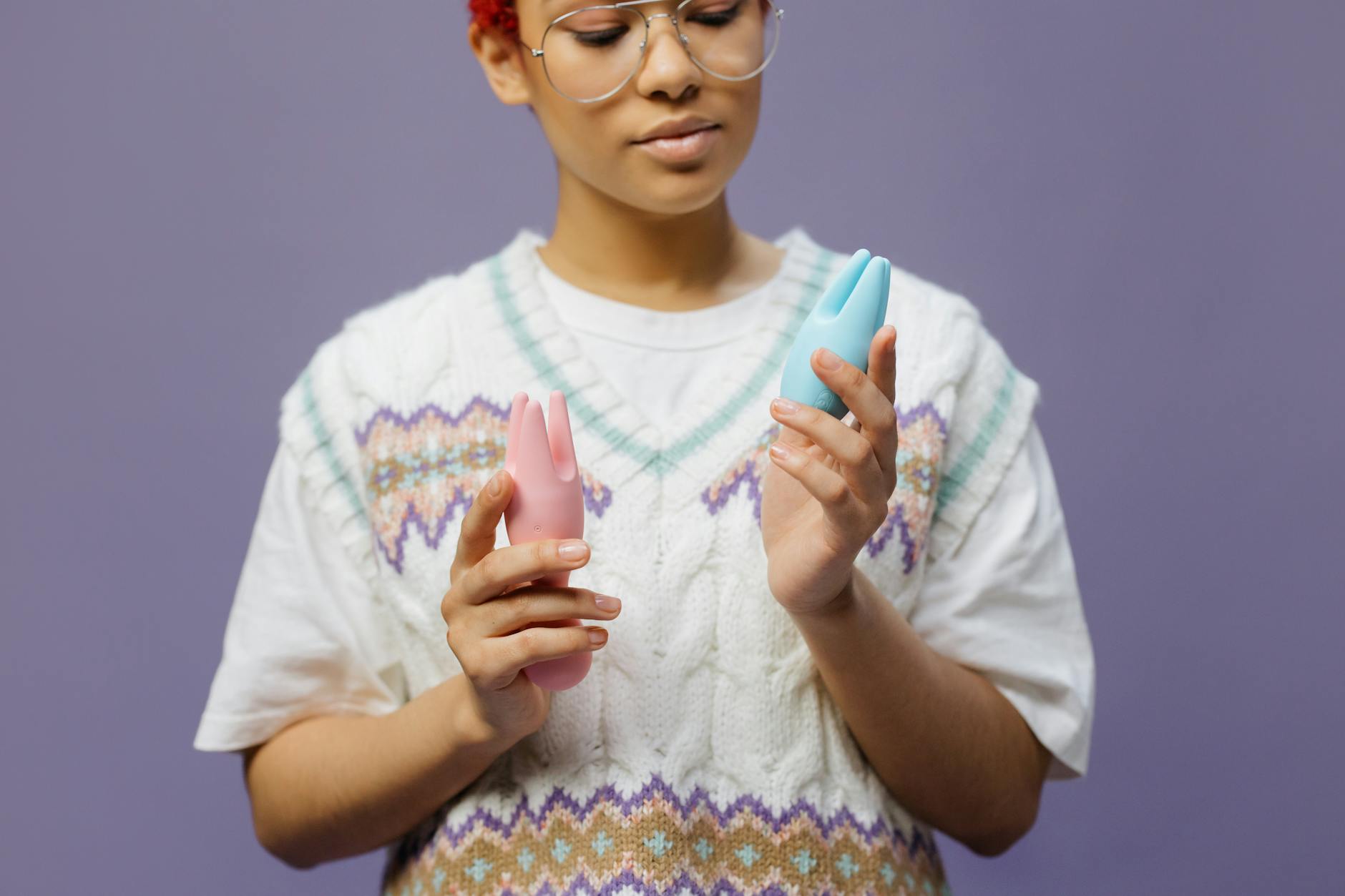
Photo by cottonbro studio on Pexels
What to do if sensitivity hasn't returned after three months
This isn't common, but it happens. Some people's bodies respond more drastically to hormonal shifts, and some birth control formulations suppress sensation more than others.
First, check with your prescriber. A lower-dose pill, a different progestin, or a non-hormonal method might make a difference. Don't assume you're stuck with this forever.
Second, don't try to force increased pleasure by turning up stimulation aggressively. That usually backfires. Instead, focus on lengthening foreplay and building arousal as a process rather than a destination. Some people find that pleasure returns faster when they let go of the goal of climax and just experience sensation.
Third, consider whether other factors are layering on top of the hormonal shift. Are you stressed? Tired? Not interested in your partner or situation? Sometimes lower sensitivity is hormonal. Sometimes it's psychological. Often it's both. If you're also experiencing mood changes or anxiety (which some birth control formulations do trigger), that can dampen arousal just as much as lower testosterone.
When you stop birth control: the rebound effect
If you've been on hormonal birth control and you stop, get ready for your body to feel different again. This time, in the opposite direction. Your estrogen and testosterone rebound over 2-4 weeks. Many people experience increased sensitivity, faster arousal, and stronger orgasms. That's great. But it can also feel overwhelming if you've gotten used to the muted version.
If hypersensitivity kicks in after you stop birth control, you might need to start at even lower lemon vibrator patterns than you think. The adjustment window is usually shorter (people rebound faster than they acclimatize), but it's still real. Let your body settle for a few weeks before assuming your new baseline.
The bigger picture: your pleasure baseline is always changing
Hormonal birth control is one example, but your clitoral sensitivity shifts with your cycle, your stress level, your relationship status, your age, and your medication list. None of these changes mean something is wrong. They mean you're human, and your body is responsive to its environment.
The people I work with who navigate these shifts most gracefully are the ones who treat their pleasure like they'd treat their workout routine. When something changes, you adapt the technique. You don't shame yourself for needing adjustment. You don't assume you're broken. You just recalibrate.
A lemon vibrator is a tool for that recalibration. Use it to listen to what your body is telling you right now, not what it told you six months ago. That honesty makes the transition easier.
FAQ: Clitoral sensitivity and hormonal birth control
Why does my clitoris feel numb even though the vibrator is strong? Hormonal birth control lowers blood flow to your genitals, which means the tissue is less engorged during arousal. Less engorgement means the clitoris sits differently under its hood, and strong vibration might actually slide past the sensitive area instead of connecting with it. A lemon vibrator at a lower pattern can help because suction adjusts as tissue swells. Give your body time to build arousal before assuming the numbness is permanent.
Will my sensitivity come back if I switch to a different birth control? Maybe. Some people are very sensitive to hormonal shifts and find that switching to a lower-dose pill or a different progestin helps significantly. Others find that non-hormonal options (copper IUD, condoms) restore sensation completely. It's worth trying if numbness is affecting your quality of life. Talk to your provider about your options.
How long does it take for sensitivity to return to normal after starting birth control? Most people see improvement within 8-12 weeks as their bodies adjust. Some experience full return of baseline sensation by month 3. Others stabilize at a slightly lower level and stay there. A small percentage (maybe 5-10%) experience persistent dampening that doesn't resolve. If you're in that group after 12 weeks, it's worth exploring whether a different formula would help.
Can I use a lemon vibrator on a lower setting permanently if my sensitivity stays muted? Absolutely. Pleasure isn't about achieving a specific sensation level. If lower patterns on a lemon clitoral vibrator feel good to you, that's your baseline now. Use what works. Don't chase what used to work.
Does stopping birth control make clitoral sensitivity come back faster than starting it? Usually yes. When you stop hormonal birth control, your natural hormones rebound over 2-4 weeks. Most people notice increased sensitivity and faster arousal relatively quickly. But the adjustment window is still real. Give yourself at least a month to recalibrate before deciding whether you prefer your sensitivity pre- or post-birth control.
Is there anything else that mimics hormonal birth control's effect on sensation? Yes. Antidepressants (especially SSRIs), antihistamines, and some blood pressure medications can dampen arousal and sensation. So can stress, sleep deprivation, and relationship tension. If you started birth control at the same time you also started a new medication or life stress, the sensitivity shift might not be entirely about the birth control. Look at the full picture.
Should I tell my partner that my sensitivity has changed? If you have a partner, yes. Not as a confession, but as information. "My body is adjusting to new birth control, so I need longer warm-up time" is useful data that helps them understand you're not losing interest. It's also true that your pleasure matters, and partners who care about you want to know what helps. You're not burdening them. You're giving them the tools to connect with you better.
Can switching between different lemon vibrator patterns help me figure out my new sensitivity baseline? Completely. Start at pattern 1 or 2, spend a few minutes there, and notice what happens. Then move up. Pay attention to where pleasure starts to build versus where stimulation feels numb. That tells you where your current sensitivity baseline is. Different days might feel different too, especially if you're cycling off hormonal birth control. That variation is normal.
Moving forward with recalibrated pleasure
Your body isn't broken when birth control changes your sensation. It's adapting. And adaptation is something you can work with, not something you have to fight. A lemon vibrator, because of how suction responds to your body's arousal, gives you a tool that meets you exactly where you are right now. Use it to listen to what feels good today, not to chase what used to feel good last year. That shift in perspective usually makes the adjustment phase shorter and way less frustrating.
If you're still struggling with sensitivity shifts after adjusting your technique and giving your body time, reach out to discuss what might help. You're not alone in this, and there are more options than you might think.