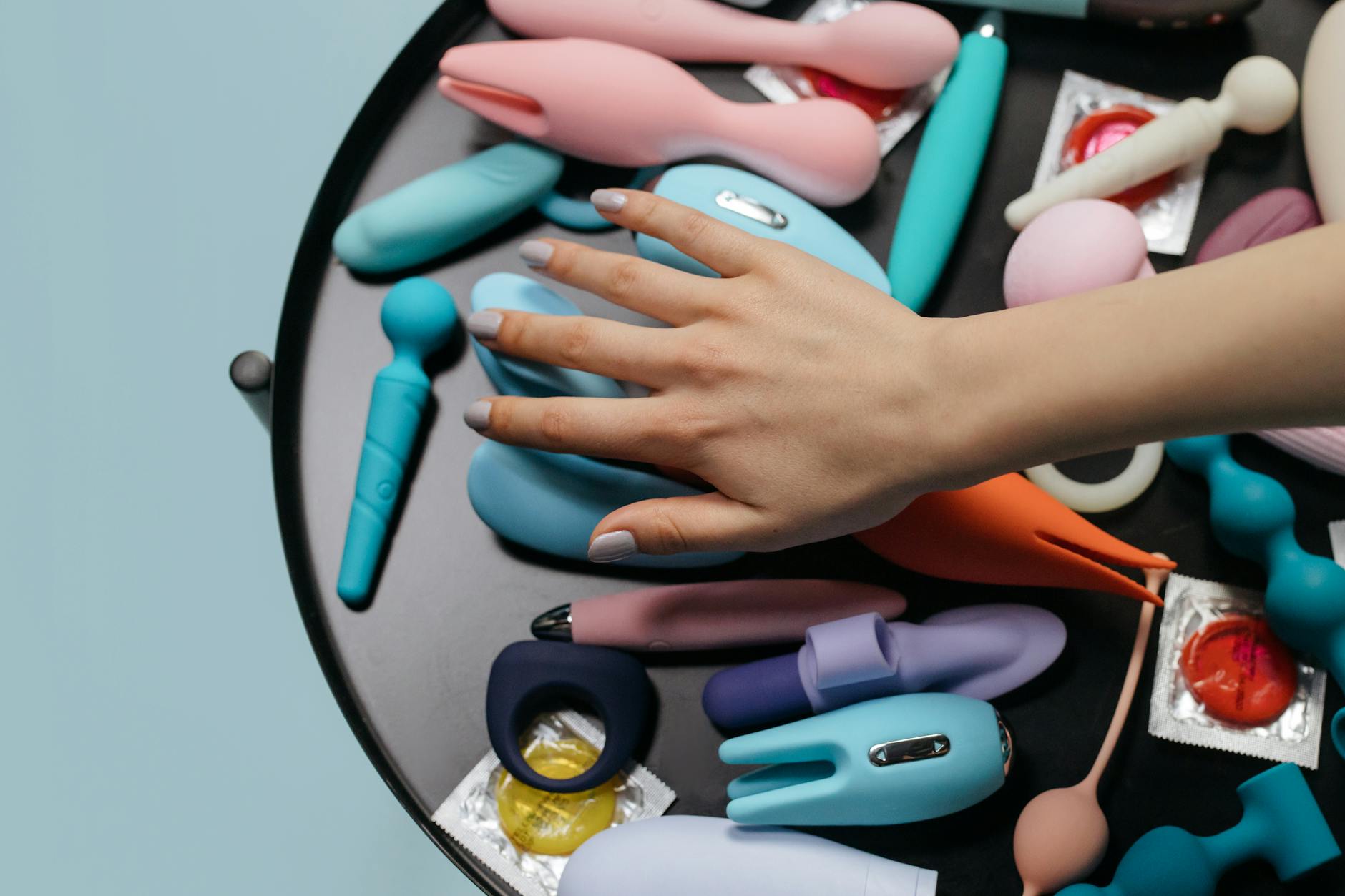
How to Use a Lemon Vibrator When Orgasms Feel Different After Hormonal Changes
Here's what almost nobody tells you: your orgasms can feel completely different after hormonal shifts, and that's not a failure. It's a recalibration.
I work with couples navigating this all the time. One partner describes orgasms as softer now, or more interior, or delayed. The other worries something is broken. Both start double-guessing their whole sexual relationship when really, the only thing that changed was the biochemistry underneath. Once you understand what's actually happening and adjust your approach, pleasure often becomes richer, not diminished.
What hormonal shifts actually change (and don't)
When hormones shift—whether from birth control changes, perimenopause, postpartum recovery, or medication—several physical things happen at once.
Tissue thickness decreases. Lubrication patterns change. Blood flow to the genitals takes longer to build. The pelvic floor muscles lose some of the structural support estrogen provided, which changes how sensation travels through the whole region. Oxytocin production may shift too, which affects that deep bonding feeling some people get with orgasm.
But here's the part that matters: the neurological pathways for pleasure don't just vanish. Your clitoris still has roughly 8,000 nerve endings. Your brain still fires up the exact same pleasure centers. The capacity for intense, full-body orgasms is still there. What changed is the delivery system, not the destination.
Why orgasms might feel softer, shorter, or delayed
Three main reasons show up again and again in my practice.
First, arousal takes longer. Hormonal shifts slow the pace of blood flow to the genitals. Where you used to reach peak arousal in five minutes, you might need fifteen now. That's not a problem unless you're still expecting the old timeline. Once you budget the extra time, the orgasm that follows often feels deeper because your body's had time to really settle into it.
Second, sensation concentrates differently. Lower estrogen means less tissue swelling and engorgement. Some people describe this as losing the "expansive" feeling of a big clitoral swell. Instead, sensation can feel more localized, more textured, less about volume and more about precision. For many, this shift reveals that smaller, more targeted stimulation actually works better than the broad pressure they used to need.
Third, the recovery shape changes. Orgasms might feel shorter because the aftershocks are milder. Post-orgasm, your body might drop back to baseline faster instead of riding a long wave down. This feels like the orgasm "ended" when really it just stopped announcing itself.
None of these are deficits. They're just different terrain.
Why lemon vibrators work when sensation feels different
A lemon clitoral vibrator works differently than traditional vibrators because it uses air-pulse suction instead of mechanical vibration.
Where a standard vibrator creates friction through oscillation, a lemon sucker like the Lem creates a rhythmic pulsing sensation that mimics oral suction. For bodies navigating hormonal changes, this matters because the suction mechanism doesn't require the same level of tissue thickness or direct pressure to feel intense. It works through the nerve pathways under the skin, not against the tissue surface.
My clients with hormonal shifts often find that what used to require a high-speed setting now feels overwhelming, but a lemon vibrator on a lower pulse pattern delivers the same—or better—sensation. The air-pulse technology is gentler on thinner tissue and creates a different kind of stimulation altogether.
Lemon adult toys are also brilliant for the timing problem. Because suction builds sensation differently than vibration, you can spend more time in the buildup without overstimulation. The pathway to orgasm becomes a longer, more explorable terrain instead of a sprint.
How to adjust your technique with hormonal changes
Start by forgetting what used to work. I know that sounds harsh, but it's actually liberating.
Lengthen your warm-up phase. Budget 20-30 minutes instead of your old timeline. This isn't because something is wrong. It's because your body now needs time to build blood flow and tissue responsiveness. Use the first part of this time for touch that feels good but isn't directly genital. Foreplay, kissing, undressing slowly. Let your nervous system settle into pleasure mode.
Start your lemon vibrator on pattern 1 or 2. Whatever your old "normal" setting was, assume you now need to begin lower. You can always increase intensity, but starting too high teaches your body to chase stimulation instead of receiving it. Pattern 1 often feels subtle at first, then deepens as arousal builds.
Find your new sweet spot. Spend time experimenting with different patterns and intensities without the goal of orgasm. This might sound backward, but removing the pressure to "finish" lets you actually notice what feels good now. You might discover that a pattern you never used before actually works beautifully, or that you prefer holding the lemon vibrator at a slightly different angle than you used to.
Use plenty of lubricant. Hormonal changes often mean less natural lubrication. A good water-based lube doesn't just make things comfortable—it helps the suction mechanism work more effectively and creates a better seal. This is basic but transformative.
Pay attention to your arousal arc. After hormonal shifts, many people find that arousal doesn't just ramp up steadily. It might plateau for a while, then deepen. Or it might feel like two separate waves. Instead of fighting this rhythm, lean into it. Let the plateau happen. Keep using your lemon clitoral vibrator at the same setting and notice when the next surge arrives.
The emotional piece nobody mentions
Here's something I see constantly: the pleasure change is real, but so is the mental story you're telling about it.
If you interpret a different orgasm as "worse," your body will tense up trying to recreate the old one. You'll grip tighter, rush through the buildup, and ironically make the new sensation feel even duller. If you can approach it with curiosity instead of comparison, everything shifts. A softer orgasm isn't a failed attempt at the old kind. It's a different category of pleasure.
Talk about this with your partner if you have one. "My orgasms feel different because my hormones changed, not because I'm less attracted to you" is a completely different conversation than "Something is wrong with me." Once your partner understands the actual mechanics, you can work together instead of both getting anxious.
When to seek additional support
If orgasms have disappeared entirely, or if pain appears where there was none before, that's worth discussing with a gynecologist who understands hormonal health. Genitourinary syndrome is treatable. Low testosterone can be addressed. These aren't permanent conditions, and they're way more common than the silence around them suggests.
If emotional patterns are tangled up with the physical change—resentment about aging, grief over identity shifts, relationship strain—that's where a therapist comes in. I often work alongside clients' doctors and gynecologists because sexual health lives at the intersection of body, mind, and relationship.
What most people get wrong
The biggest mistake I see is assuming that different equals broken. Your lemon vibrator isn't broken because it works differently on your body post-hormonal shift. Your body isn't broken. Pleasure itself isn't diminished. It's evolved.
Many of my clients eventually tell me that their favorite orgasms of their entire lives happened after their hormones shifted. Once they stopped fighting the change and started working with it, they discovered sensations they'd never found before. A lemon clitoral vibrator often becomes the key to unlocking that.
FAQ: Hormonal Changes and Pleasure
Why do orgasms feel duller after hormonal changes?
Orgasms often feel muted after hormonal shifts because reduced estrogen means less tissue engorgement and blood flow buildup. The physiological buildup is gentler, so the orgasm feels less explosive. This isn't a smaller orgasm. It's a more subtle one. Many people, once they adjust their expectations, find the sensation is actually more complex and satisfying, just less dramatic.
How long does it take to adjust to different orgasms after hormonal changes?
Most people find a new rhythm within 4-8 weeks of consistent exploration. Your body adapts faster than your mind does. The physical adjustment happens relatively quickly, but the mental shift—the letting go of how things used to feel—takes longer. Give yourself at least two months of regular, pressure-free experimentation before assuming this is your permanent baseline.
Can a lemon vibrator help if my orgasms feel hard to reach now?
Yes, strongly. Lemon vibrators use air-pulse suction rather than mechanical vibration, which builds sensation differently and often works better with hormonal tissue changes. The suction mechanism is gentler on thinner tissue, creates more direct nerve stimulation, and many people find they can access orgasm more easily with a lemon clitoral vibrator than with traditional vibrators after their hormones shift.
Is it normal for orgasms to feel more localized or interior after hormonal changes?
Completely normal. Lower estrogen often means less clitoral swelling, so sensation becomes more concentrated in the nerve tissue rather than spread across a larger engorgement. Some people describe this as "more textured" or "more intense in a smaller area." This is a real change, not an illusion, and many find this kind of precision orgasm actually feels better once they stop comparing it to the old dispersed sensation.
Should I tell my partner that my orgasms feel different now?
Absolutely. Your partner likely notices something has shifted, and they're probably worried it's about them. Once you explain the hormonal mechanism, you can both stop spiraling and start collaborating. "My body is responding differently because of hormonal changes, not because anything is wrong between us" transforms the conversation completely. A partner who understands this can help you explore new techniques instead of both of you trying to recreate something that no longer fits.
What if my partner and I used to have coordinated orgasms and that doesn't work anymore?
This is incredibly common after hormonal shifts. The timeline no longer matches. Rather than fighting this, reframe it. Coordinated orgasms are nice, but so is taking turns, or using the time while one person is building toward orgasm to explore a different kind of touch. Many couples find that releasing the pressure to finish together actually makes sex better because nobody's stressed about timing. A lemon vibrator can help the person with slower arousal reach orgasm in their own timeline while their partner is involved in whatever way feels connected.
The bigger picture
Hormonal changes alter pleasure. They don't end it. Once you understand what's actually shifted in your body and stop trying to force pleasure into an old mold, exploration becomes genuinely fun again.
A lemon clitoral vibrator often becomes the tool that helps you map this new terrain. The air-pulse suction works with your post-hormonal-shift body instead of against it. You get to rediscover orgasm in a different way, which for many people means discovering sensations that the old version of their body never actually allowed.
Your pleasure hasn't declined. It's just asking you to show up differently. And honestly? That's where the good stuff is.
Want to explore this more with expert guidance? Get in touch with us to chat about what tools might work best for your body right now.