
The myth that's ruining the conversation
Let's name the thing that's actually happening: your partner thinks introducing a lemon vibrator into your sex life means you're saying they're not enough. That's the real objection. Not that toys are "weird" or "unnecessary" or "too intense." It's that vibrators feel like a referendum on their performance, their desirability, their role in your pleasure.
This belief is so common I've seen it tank relationships that were otherwise solid. And it's based on a fundamental misunderstanding of how pleasure works.
Why partners resist (and why they're wrong)
Here's what your partner might actually be thinking: "If she needs a vibrator, I'm failing. A real partner should be able to make her come." That's the anxiety underneath the resistance.
But that's not how bodies work. A lemon clitoral vibrator isn't a replacement for a partner. It's a tool that works with your body's neurology in a specific way. Air-suction technology stimulates the clitoris without the kind of direct friction that can feel overwhelming or numb over time. It's not about your partner being "not enough." It's about your body getting what it needs.
Think of it this way: if your partner wears glasses, you don't assume you're not attractive enough. Glasses help them see better. A lemon vibrator does something similar. It helps your body respond better. Completely different category of thing.
The conversation that actually works
Don't lead with the vibrator. Lead with yourself.
Start with something like: "I've noticed I want to feel more sensation during sex, and I'm curious about trying something that might help. I want to include you in this because I want us to figure this out together." Notice what's absent: defensiveness, apology, justification. Just a statement about your body and an invitation.
Then, depending on their response, you have a few paths. If they ask what you want to try, tell them: a lemon vibrator designed specifically for clitoral pleasure. Explain the mechanics. Tell them it uses gentle suction instead of vibration, that it's quieter and less intense than traditional vibrators, and that studies show air-suction technology works better for people with less sensation or sensitivity.
If they push back with "I thought I was enough," you have your answer ready: "You are. This isn't about you. It's about my body getting what it needs, the same way your body might need something I can't provide alone. That's not rejection. That's partnership."
This reframe is essential. You're not choosing the toy over them. You're choosing yourself, and inviting them to be part of that choice.
The solo path (if they're still not ready)
Here's the truth that changes everything: you don't need their permission to use a lemon vibrator alone.
If your partner remains resistant after a genuine conversation, you have options. You can use a lemon clitoral vibrator during solo time. Full stop. No apology required. Pleasure is a non-negotiable part of your physical and mental health, and it's your right.
Many partners who initially resist actually come around once they see that using the toy doesn't diminish the relationship or their role in your sex life together. Watching your partner experience more pleasure, have deeper orgasms, or feel less frustrated in the bedroom often softens the resistance. Sometimes the best argument isn't words. It's results.
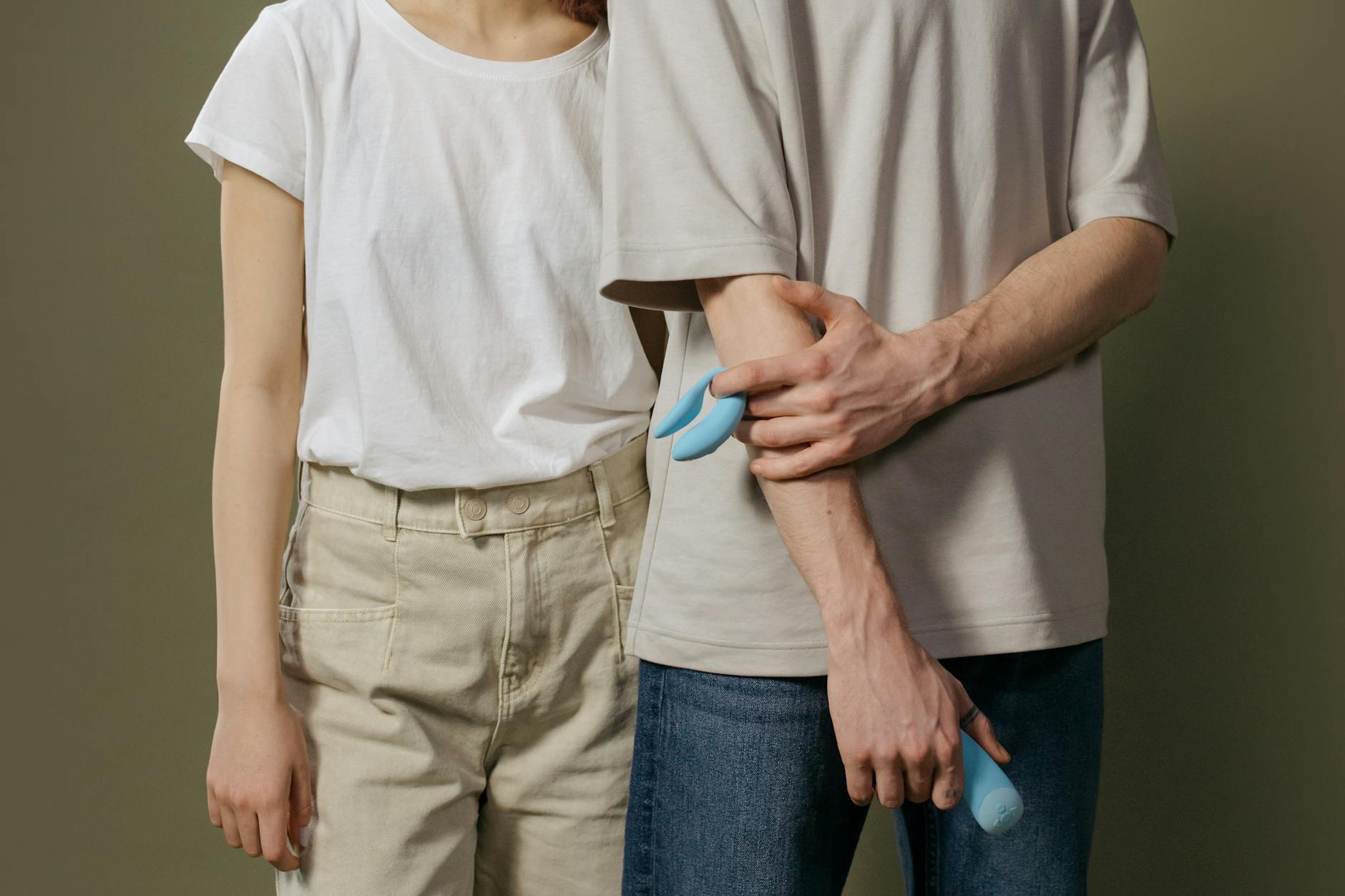
Photo by cottonbro studio on Pexels
When you want to use it together
If your partner is open to trying, here's how to make it feel collaborative rather than threatening.
First, let them choose the moment. Don't spring it into sex without context. Instead, when you're close and connected (maybe during foreplay, maybe during a conversation in bed), bring out your lemon vibrator and ask if they want to explore it together. Frame it as curiosity, not criticism.
Second, let them hold it initially if they want. Handing them control over the tool often dissolves anxiety. They get to see how it works, feel the sensation levels, understand that it's gentle and specific. Many partners report that this single act shifts their perception from threat to tool.
Third, start on a low setting. If you're using a lemon clitoral vibrator like the Lem, begin at pattern 1 or 2. Let your body adjust. Tell your partner what feels good. This data (your feedback) becomes proof that the vibrator is helping you, not replacing them. You're actually more responsive, more vocal, more present.
Fourth, involve them in the rhythm. Your partner can use the lemon vibrator on you while touching you elsewhere, or while you're touching them. The combination of sensations often feels more intimate than solo toy use. They're not being replaced. They're participating in something that helps you feel more pleasure.
The deeper fear (and how to address it)
Most partner resistance isn't really about the vibrator. It's about feeling wanted, valued, and sufficient. That fear doesn't disappear because you bought a toy. It disappears because you're honest about what the toy actually is.
Regularly affirm the things that matter: "I love how you touch me." "I want you." "This vibrator helps my body respond better, and that means more pleasure for both of us." These statements can feel corny, but they're not. They're reassurance, and they matter.
If your partner has been neglected or if there's deeper intimacy work needed, a lemon vibrator won't fix that. That needs a different kind of conversation or professional support. But if you're in a generally solid relationship and there's just resistance to this one tool, the reassurance works.
What if they warm up to the idea but want to pick the toy
This is actually a win. Let them have agency. If they want to research lemon vibrators or choose which model you use together, that's them buying in. They're moving from resistance to partnership.
You might guide them toward Hello Nancy's lemon clitoral vibrators because the quality and design matter, but the fact that they're interested at all signals a shift. Ride that momentum.
The compromise position
Some partners need a middle ground. They might agree to vibrator use only during solo time, or only occasionally during partnered sex. That's a boundary, not rejection. Honor it. Many couples who start with compromise eventually become more comfortable as anxiety decreases. Start where your partner can handle it.
When to get outside help
If your partner's resistance is tied to deeper insecurity, shame around sex, or control issues, a couples therapist trained in sex-positive work can help. This isn't a failure on your part. Sometimes the barrier isn't the vibrator. It's unresolved relationship dynamics that need professional navigation. That's worth addressing.
The bottom line
Your pleasure matters. A lemon vibrator doesn't diminish your partner. It augments your capacity for sensation and response. A secure partner eventually understands that helping you feel more pleasure benefits both of you. If yours doesn't come to that understanding after honest conversation, that's information too. But most of the time, reframing the conversation from "this is about you not being enough" to "this is about my body getting what it needs" unlocks a whole different dynamic.
Start with vulnerability, not defense. That's the move.
People also ask
Will using a lemon vibrator make my partner feel replaced or less desired?
Not if you approach it as a tool for enhancing your pleasure together, not replacing them. The anxiety comes from your partner's insecurity, not from anything inherent to the vibrator. Many partners who initially worry actually feel more desired when they see how much more responsive and engaged you become. The vibrator isn't competition. It's collaboration.
Can I use a lemon clitoral vibrator solo even if my partner doesn't want it in partnered sex?
Absolutely. Your pleasure is not contingent on your partner's approval. Solo use of a lemon vibrator is a completely valid choice. In fact, many partners who see the benefits of solo use (more relaxation, better sleep, more confidence) eventually become open to partnered use. But you don't have to wait for permission.
What if my partner says vibrators are "unnatural" or "cheating"?
That's usually shame or insecurity wearing a different label. You might respond with: "Glasses are also unnatural. So is deodorant. We use tools that help our bodies work better all the time. This is the same thing." If they persist, that's worth exploring in couples therapy. Those beliefs often signal deeper issues about control or sex that benefit from professional support.
How do I bring up lemon vibrators without making my partner defensive?
Frame it around your body, not their performance. Instead of "I want to feel more," say "I've noticed my body responds differently than it used to, and I want to explore what helps." This signals that you're taking responsibility for your pleasure, not blaming them. Then invite them in as a partner in solving the puzzle.
If my partner tries a lemon vibrator and hates it, what then?
Respect that boundary. But clarify whether they hated the vibrator itself or the idea of it. If it's the tool, you can try a different kind. If it's the concept of toys in sex, that's a conversation about values and comfort that might need more time or professional help. Don't force it, but don't abandon your own needs either.
Is it normal for partners to resist sex toys?
Yes. Generational messaging, insecurity, shame, or control dynamics all play a role. It's common, but it's not unchangeable. Most resistance softens when partners understand that toys enhance, not replace. And some partners never fully warm up, which is worth acknowledging early so you can decide what that means for your relationship.
Final thought
Your desire matters. Your body's response matters. A lemon vibrator is a tool for getting closer to what feels good. If your partner can't eventually support that, that's a relationship question bigger than the vibrator. But most of the time, honest conversation and reassurance do the work. Start there.