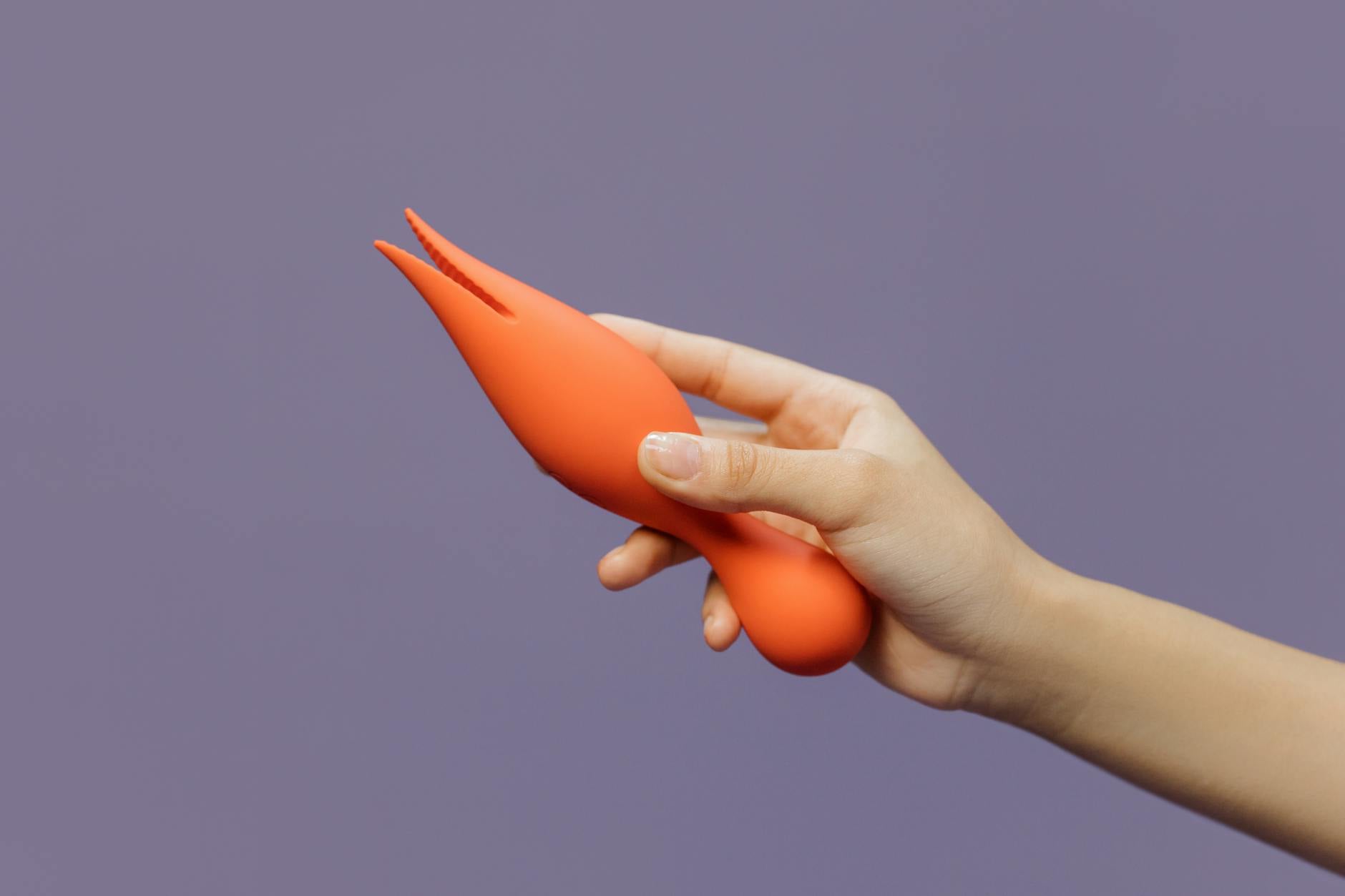
When your body feels like it belongs to someone else
Here's the thing nobody talks about: you can be in the middle of intimacy and feel completely gone. Not tired, not uninterested. Just... absent. Like you're watching yourself from somewhere near the ceiling, present in body but completely untethered from sensation. It's a specific kind of loneliness, and it happens to way more people than admit it out loud.
Dissociation during sex is not a personal failure. It's a protective mechanism your nervous system deployed at some point, usually in response to stress, past trauma, anxiety, or even just chronic disconnection from your own body. The tricky part is that once it starts happening, the anxiety about it happening again can make it worse. You end up in a loop.
Why disconnection happens during pleasure
Dissociation in intimate moments usually traces back to one of three roots. First: learned protection. If intimacy ever felt unsafe or overwhelming, your nervous system learned to check out as a survival strategy. It still does that automatically, even when you're now safe. Second: chronic stress or depression dampens your ability to stay present in your body anywhere, not just during sex. When you're running on fumes, dissociation is your brain's shortcut to conserving energy. Third: performance pressure. If you've internalized the idea that you "should" feel something specific, or that your pleasure is someone else's responsibility to create, the gap between expectation and reality can flip you straight into observer mode.
None of these are character flaws. They're all nervous system patterns that rewired for good reasons. The good news: they can rewire again.
How sensation-focused tools help ground you
This is where lemon clitoral vibrators become genuinely useful, not as a magic fix but as a nervous system anchor. Here's why they work specifically for reconnection.
The suction mechanism on a lemon vibrator creates a consistent, predictable stimulus. Your nervous system craves predictability when it's in hypervigilance or dissociative mode. Unlike hand stimulation, which varies in pressure and rhythm, a lemon vibrator delivers the exact same sensation every second. This removes one layer of sensory processing and frees up bandwidth for you to notice other things. Texture. Temperature. The weight of your own body on the bed.
Second: the intensity demands attention. Lemon vibrators don't whisper. They claim space in your awareness. When you're dissociated, your nervous system is downregulating sensation to protect you. A focused, intense stimulus can cut through that dampening. Not by forcing you to "stay present" (that never works), but by being so distinctly interesting that your brain naturally orients toward it.
Third: you control the pace and intensity completely. One of the biggest drivers of dissociation during partnered sex is surrendering control of your own pleasure. With a lemon sexual toy in your own hands, you're making every single choice. That autonomy itself is grounding.
How to actually use a lemon vibrator for reconnection
Start slower than you think you need to. If you're in dissociation mode, jumping straight to high intensity can feel like an assault to your nervous system, which can trigger more checking-out, not less. Begin on a lower pattern. Many people find patterns 1-2 on a lemon lem vibrator create just enough sensation to register without overwhelming.
Second, add a conscious check-in layer. Before you start, place your other hand somewhere on your body. Your thigh. Your chest. Anywhere you can feel steady contact. Every 30 seconds, consciously notice: What temperature is my skin right now? Can I feel the weight of my body sinking into the bed? What sounds am I actually hearing? These aren't distractions. They're anchors. They're your nervous system's way of confirming that you're here, in this room, in your body.
Third, expect it to feel weird at first. If you've been dissociated during pleasure for a while, reconnecting will feel unfamiliar. You might feel almost too much, or you might feel like you're "doing it wrong." Neither is true. Reconnection is gradual. Some sessions you'll feel present for five minutes and then drift. That's not failure. That's your nervous system learning it's safe to stay.
Lemon clitoral vibrators work particularly well because they're specifically designed to target the dense nerve endings in the clitoral glans. That means less pressure needed to register sensation. For people whose nervous systems are prone to dissociation, gentler tools with higher precision often feel safer than more aggressive stimulation.
The role of breathing and micro-awareness
Don't underestimate how much dissociation involves holding your breath or shallow breathing. When you're not present in your body, you're often not breathing fully either. Before you pick up a lemon vibrator, try this: breathe in through your nose for four counts, hold for four, out through your mouth for four. Do this five times. It's not meditation. It's literally telling your parasympathetic nervous system that it's safe to stay.
During stimulation, if you notice you're drifting, the first thing to check is your breath. Are you holding it? Are you breathing fast and shallow? Slow that down. A longer exhale than inhale specifically calms the nervous system. This sounds stupidly simple, but it works because dissociation and breath go hand in hand.
Micro-awareness also means noticing tiny pleasure signals before they become big ones. Instead of waiting for an orgasm that might not come, or feeling pressure to "get there," notice when a sensation feels slightly different than neutral. That flutter. That tiny tightening. Those micro-moments are where presence lives.
When to bring a partner into this process
If you have a partner, one conversation needs to happen first: this is not their job to fix. Your dissociation is not about them not being enough. It's a nervous system pattern. Full stop. If they get that, great. If they turn it into a reflection on whether they're attractive or skillful enough, this work becomes impossible because now the stakes feel higher.
Once that's clear, here's how partnered reconnection can work. You use a lemon vibrator solo first. Your partner's job is to stay present, maybe with a hand on your arm or your back, but not directing anything. They're a calm anchor, not a performer. As you get more comfortable staying present on your own, you can gradually invite them closer. Not to make you feel something. Just to be there while you do.
Some people find that external pressure to perform — even well-intentioned — triggers dissociation instantly. If that's you, that information is gold. It tells you that solo exploration with lemon sexual toys might always be part of your pleasure life, even within a partnership. That's not a limitation. That's a valid, sustainable way to stay connected to your body.
What happens when you start to reconnect
The first time you stay present through an entire experience with a lemon clitoral vibrator, you might feel almost surprised by your own pleasure. Not overwhelmed. Just... there. That clarity is what reconnection feels like. It's not fireworks. It's the quiet knowledge that you're inside your own body.
From there, presence builds. Some sessions you'll drift and that's fine. Your nervous system is learning a new pattern and that takes time. But gradually, you'll notice that you're staying present longer. The dissociation still might show up during partnered sex, because different contexts trigger different nervous system states. But you'll have a map now. You'll know what helps. You'll know your body is not broken. It's just been protecting you.
Reconnection isn't a destination. It's a practice. And lemon vibrators, used thoughtfully, are a tool that lets you practice staying home in yourself.
FAQ: Reconnecting to pleasure and lemon vibrators
Can dissociation during intimacy go away permanently?
Yes and no. The underlying nervous system tendency might always be there, especially if it was built in response to real stress or past experiences. But the frequency and intensity absolutely can shift. With consistent practice, presence becomes the default and dissociation becomes the exception. Some people find they dissociate only under specific circumstances now, instead of during all intimacy. That's huge progress.
Should I use a lemon vibrator alone or with a partner when reconnecting?
Start alone. Period. There's no performance pressure, no external expectations, and no need to manage someone else's experience. Once you've felt what it's like to stay present on your own using a lemon adult toy, adding a partner becomes about connection instead of rescue. Solo use gives you the safety net you need to learn.
What if nothing feels good and I still feel disconnected even with a lemon vibrator?
Dissociation sometimes needs more than a tool. A trauma-informed therapist or sex therapist can help you understand what triggered it in the first place and work with your nervous system directly. Lemon clitoral vibrators are helpful, but they're part of a toolkit, not the whole toolkit. There's no shame in needing professional support.
How long does it take to feel reconnected during pleasure?
It depends on how long you've been dissociated and what caused it. Some people feel present again within a few sessions. Others need months of consistent practice. The timeline isn't a measure of success. The direction is. If you're slightly more present this week than last week, that's the whole game right there.
Is dissociation during sex the same as low libido?
No. You can have a high sex drive and still be dissociated. You're aroused, interested, wanting to be intimate. You're just not actually there when it happens. That distinction matters because the solutions are different. Low libido might need hormonal investigation or relationship work. Dissociation during sex needs nervous system grounding, which is exactly what a lemon vibrator can help with.
Can I use a lemon vibrator if I'm on antidepressants or anxiety medication?
Yes, absolutely. In fact, some of those medications can contribute to dissociation or sexual numbness, making reconnection work even more important. A lemon sexual toy won't interfere with medication. If anything, the focused, predictable stimulation sometimes feels easier to register when sensation is already dampened. Talk to your prescriber if you have concerns, but this is not a contraindication.
Your pleasure matters. Your presence in your own body matters. And reconnection is always possible, one breath, one sensation, one moment of staying here at a time.