Let's start with the honest part
Pleasure after trauma is not straightforward. It's not broken, and it's not gone. But it requires something most pleasure conversations never mention: a tool and a context that let you stay in complete control.
I work with clients rebuilding intimacy after trauma regularly. The pattern is always the same. The body remembers things the mind hasn't fully processed. Sensation becomes complicated. Trust becomes complicated. And the usual advice ("just relax" or "try something new") misses the entire point.
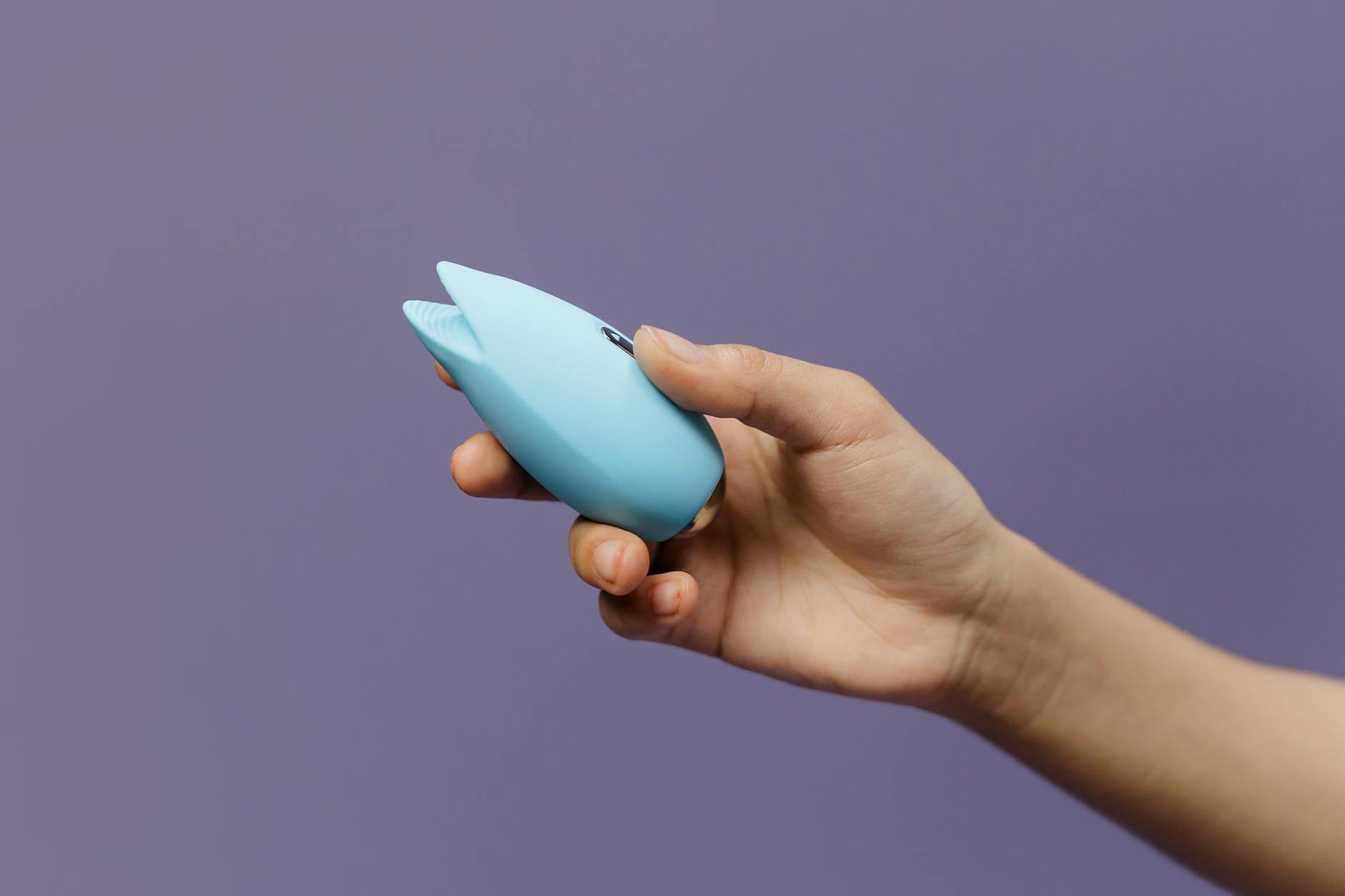
Here's what actually helps: tools designed around control, predictability, and your own pace. A lemon vibrator isn't a magic fix, but it's structurally built for what trauma recovery actually needs.
Why control matters more than intensity
Trauma disrupts the nervous system's basic safety signal. When someone has experienced sexual trauma, the body's threat detection system gets hyperactive. A touch meant to feel good reads as dangerous. An unexpected sensation triggers a freeze response. The volume on everything gets turned up.
Most vibrators are designed around sensation and speed. You press a button and something happens to you. That passive receiving is the opposite of what your nervous system needs right now.
A lemon vibrator works differently. You hold it. You choose the pressure. You choose the rhythm. You choose when it stops. That's not a small detail. That's the foundation of feeling safe enough to feel pleasure.
The mechanism matters too. Unlike traditional vibrators that buzz at a fixed frequency, air-suction devices like the Lem work through gentle suction and release. The sensation is predictable. It builds gradually. Your body doesn't get ambushed.
Building the container before building pleasure
Therapists use a term: "window of tolerance." It's the zone where your nervous system can process experience without flooding or shutting down. Trauma narrows that window. Pleasure, ironically, requires a wide one.
Before you pick up any vibrator, you're actually building that window. Here's what I recommend to my clients:
Start with touch, not toys. Spend 2-3 weeks reconnecting with your own skin. Hand on your arm. Hand on your shoulder. The goal isn't arousal. It's to teach your nervous system that your own touch is safe. This sounds basic. It's not.
Breathwork first, sensation second. Deep breathing (in through the nose, out through the mouth, 4-6 second cycles) is not optional. It's your anchor. When something feels off, breath is what grounds you back into safety.
Solo context, always, for the first phase. No partner. No pressure. No performance. You need to know what your own arousal feels like without anyone else's needs in the room.
Set a time boundary. Not "until I come." Maybe 10-15 minutes, then you stop. This removes the pressure to achieve something. You're just exploring what feels safe.
How to use a lemon vibrator in trauma recovery
Assuming you've done some of that foundational work, here's how to approach a tool like the Lem:
1. Start external, fully clothed. Hold the vibrator against your arm, your leg, your shoulder. Feel the suction pattern while you're clothed. No genital involvement. You're learning what the device feels like on your terms.
2. Use the lowest intensity setting. A lemon vibrator has multiple patterns. Start at pattern one. This is not about chasing sensation. It's about staying in control while exploring.
3. Apply it to non-sexual areas first. Inner forearm, the back of your neck, behind your ear. These areas are sensitive but carry less trauma activation than genitals. You're training your brain that this tool creates pleasure, not danger.
4. Move at your own pace to genital contact. This might take weeks. There's no timeline. When you do move to the clitoris, use the same low intensity. The goal isn't an orgasm. It's a felt sense of "I chose this and it feels good."
5. Stop whenever you want. Not when you come. Not when you think you should. When you want to. This is the entire point. Your nervous system is learning that your "no" or your "stop" actually works.
The specific advantage of suction over vibration
Let me explain why lemon clitoral vibrators are specifically useful in trauma recovery.
Traditional vibrators create stimulation through rapid, repetitive movement. Your nervous system has to process each pulse individually. That rapid-fire input can feel overwhelming, especially early in recovery. The sensation builds suddenly. It's harder to regulate.
Air-suction technology (the mechanism in lemon sexual toys) creates a gentler, more predictable sensation. There's suction, then release. Suction, then release. Your nervous system can anticipate the rhythm. You can control how much pressure is being applied. The sensation builds more gradually.
For clients rebuilding trust in their bodies, that difference is huge. It's the difference between feeling ambushed and feeling guided.
What to avoid
A few things I actively recommend against in the early phases:
Don't use it when you're not fully present. If you're distracted, scrolling, or rushing, stop. Dissociation is what happens when your nervous system goes offline. You want full, embodied presence.
Don't let it become a "performance tool." The goal is not to prove you can still come. The goal is to rebuild the capacity to feel pleasure. Those are different things.
Don't use it with a partner until you've used it solo successfully for at least a few months. Adding another person's needs, gaze, or expectations back into the equation too early reintroduces the control dynamics that made pleasure unsafe in the first place.
Don't expect it to work the same way every time. Trauma recovery is non-linear. Some days your window of tolerance is wider. Some days it's narrower. The tool is the same. The result will vary. That's normal.
When pleasure returns, what does it feel like?
One of the questions I get constantly is: "Will it feel like it did before?" The answer is no. And that's actually a relief.
Pleasure after trauma rebuilding is different. It's more intentional. It's quieter, often. Less about intensity and more about presence. Many clients describe it as deeper, not louder.
You're not chasing the sensation you lost. You're building a new relationship with pleasure, one that's grounded in choice and consent (with yourself). That's actually more sustainable than what came before.
A lemon vibrator is part of that process. It's a tool that teaches your body that you get to decide what happens next. That control isn't just a feature. It's the whole foundation.
FAQ: Lemon Vibrators and Trauma-Informed Pleasure
How long before I should expect to feel pleasure after trauma?
There's no timeline. I've worked with clients who rebuilt a healthy pleasure capacity in 3-4 months, and others who took 2-3 years. The variable isn't the trauma. It's whether you're actively working with a therapist, whether you have supportive relationships, and how much pressure you're putting on yourself to "get over it." A lemon vibrator can be part of that journey, but it's one tool among many. If you're working solo, a trauma-informed therapist is worth the investment.
Will using a vibrator re-traumatize me?
It can, if the context isn't right. That's why the setup matters more than the tool. If you're alone, unrushed, fully clothed at first, and using low intensity with full agency over when you stop, the risk drops dramatically. That said, listen to your body. If something triggers a freeze response or flashback, stop. That's your nervous system saying the timing isn't right. It doesn't mean you've failed.
Can I use a lemon vibrator with a partner after trauma?
Yes, but not early. After you've spent months exploring solo, after you've rebuilt some trust in your body, and after you've had explicit conversations about what feels safe, then it can become partnered. The key difference is that you should still be the one holding it. Your partner can be present, but you maintain the control. That maintains the consent dynamic your nervous system needs.
What if I don't feel anything?
Numbness is a trauma response. It's not permanent, but it's also not something a vibrator will fix on its own. If you're numb to sensation, you likely need to work with a therapist on the somatic side of trauma recovery. A lemon vibrator can be part of that, but the numbness often indicates that your nervous system is still in a protective state. That's worth addressing directly with a professional.
Is it normal to feel disconnected from sensation during recovery?
Completely. Dissociation is a survival mechanism. Your nervous system learned that leaving your body was safer than staying in it. Rebuilding embodiment takes time and practice. Use a vibrator as a gentle re-entry point, not as a tool to force sensation. The goal is slow reconnection, not breakthrough pleasure.
How do I know if I'm ready to explore pleasure again?
You should feel some curiosity without pressure. You're not trying to prove anything or return to normal. You're genuinely interested in what pleasure might feel like now. If that curiosity exists, even quietly, a lemon clitoral vibrator in a solo, unrushed context is a safe next step.
The bigger picture
Recovery isn't linear, and pleasure after trauma isn't supposed to look like it did before. A lemon vibrator isn't a solution. But it's a tool built around the things trauma recovery actually requires: control, predictability, gradually building sensation, and the absolute authority to stop whenever you choose.
Your nervous system learned that your own consent didn't matter. Rebuilding pleasure means teaching it, slowly and carefully, that you actually do get to decide what happens in your body. That's the real healing.
If you're at the point where you're ready to explore this, that's worth acknowledging. It took courage to get here. A tool like the Lem is just there to support what you're already brave enough to do.