Let's start with the obvious part nobody says out loud
You want to use a lemon vibrator. Your partner doesn't know about it. And you're not looking for permission or a conversation about it. That's completely reasonable, and it's also more common than you think.
What makes this different from other relationship questions is that shame is doing half the work. You're not keeping a secret because the vibrator is wrong. You're keeping it quiet because somewhere along the way, you learned that solo pleasure is either something to hide or something that requires justification. Both of those beliefs are worth examining.
Why privacy and partnership aren't the same thing
Here's what I see in my practice. People conflate "I want privacy" with "I want deception," and then they stack guilt on top of both. The truth is messier and more honest than that.
Privacy is a boundary. Deception is an act. A lemon vibrator locked in a nightstand drawer under some scarves is a boundary. Lying about where you were or what you were doing is deception. One strengthens your sense of self. The other erodes trust.
Your solo pleasure time is not your partner's business unless you make it their business. That's not coldness. That's autonomy. And paradoxically, people with strong personal boundaries often have better partnerships because they're not exhausted from managing someone else's feelings about their own body.
Say your partner doesn't want you using vibrators. That's a real conversation to have, but it's a different article. This one is for people who just want privacy without the relationship blowup.
The logistics of discreet use
Let's be practical. You need three things. A safe hiding spot. A charging routine that doesn't broadcast what you're doing. And a mental shift about what privacy actually means.
For the hiding spot, think about what your partner actually has access to. A lemon vibrator is small. Nightstand, back of a closet behind off-season clothes, a locked drawer, even a water bottle in a gym bag. The goal isn't Fort Knox. It's enough friction that discovery requires intent, not accident.
For charging, most lemon clitoral vibrators charge via USB. You can charge it while you're in the shower. While you're working at your desk with the door closed. While your partner is out. The charging window is usually short enough that it doesn't become a logistical nightmare.
The mental shift is the harder part. You might feel weird keeping this from your partner. That weirdness is often not about the vibrator. It's about old programming that says your body isn't yours alone, or that pleasure needs an audience to be legitimate. Neither of those things is true.
When you actually want to tell them (and how)
Here's the plot twist. Some people start with privacy and later decide they want to share. That's fine. It's also fine if you never tell them. Both are valid.
If you do decide to have the conversation, timing matters. Don't do it mid-argument or when you're already upset. Pick a calm moment, maybe late evening on the couch, when there's no pressure.
The script is simple. "I've been using a vibrator for myself, just solo time, and I wanted to tell you because I don't want to keep secrets about my body. It's not about anything being wrong with our sex life. It's about my pleasure mattering on its own." Most partners either say "okay" or "I didn't know you felt like you needed to hide that." The ones who blow up usually have their own stuff about sexuality that has nothing to do with you.
That conversation might lead somewhere. They might want to be part of it. They might want to get their own. They might not care. All of those outcomes are fine.
The practical rhythm of solo time
When you're keeping things discreet, the rhythm changes slightly. You probably can't use your lemon vibrator whenever you feel like it. That's just logistics.
Build it into routines. Sunday morning when your partner sleeps in. Wednesday night after they've left for their thing. A shower where you lock the door. Mornings before they wake up. Lunchtime when you're home alone. The goal is finding a window that feels predictable enough that you can rely on it, but natural enough that it doesn't feel like you're sneaking.
Some people also find that privacy actually heightens the experience. When you know you have a limited window, your mind doesn't wander. You're fully present with sensation instead of thinking about groceries or the email you need to send.
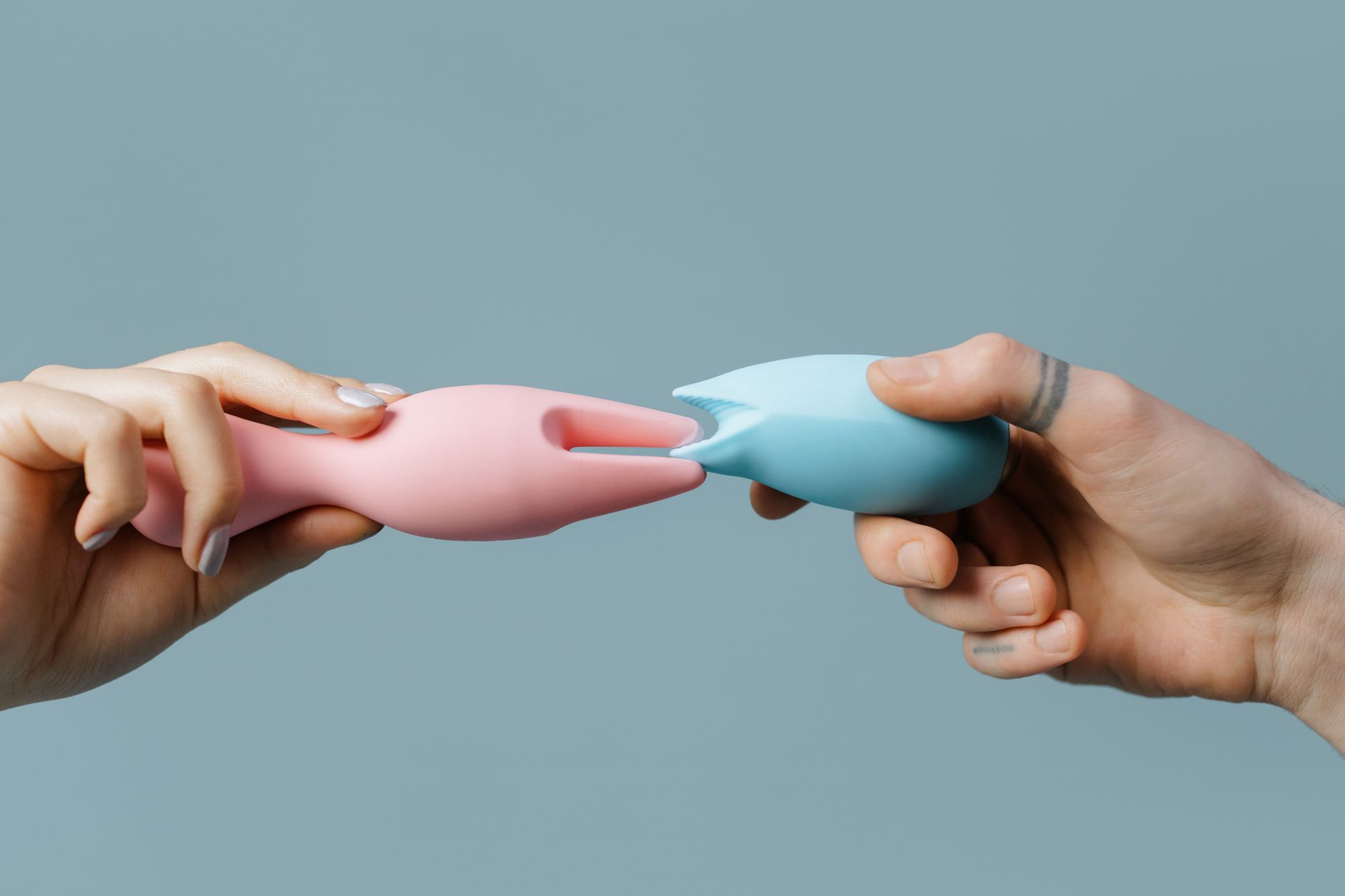
The lemon vibrator's design actually works well for discreet use. It's compact. It's quiet compared to larger wand vibrators. It delivers intense sensation without the size of something that needs serious hiding space.
What solo pleasure actually does for a partnership
I'm a relationship coach, and this is the part where I get to tell you something that contradicts the shame story you've probably been living with.
Solo pleasure time is often good for partnerships. Not because it's rebellion. Because it's maintenance.
When you have reliable access to your own pleasure, you're not expecting your partner to be your only source of physical satisfaction. That's a lot of pressure. It's why couples often feel disconnected. One person is waiting for the other to initiate, to know what they want, to deliver the right sensation. Nobody's relaxed.
When you have your own practice, you come to partnered sex lighter. Less desperate. More curious. You know your body. You know what works. You're not performing. You're participating.
Plus, there's something about solo time that teaches you about yourself. How you like to be touched. What rhythm matters. Whether you need buildup or direct stimulation. That knowledge is then available in partnered contexts, if you ever want to share it.
The shame question
Let me be direct about this. If you're using a vibrator discreetly because you genuinely want privacy, that's one thing. But if you're hiding it because you feel ashamed, that's worth examining.
Shame tells you that your body is wrong. That pleasure needs permission. That wanting sensation is selfish. None of those things are true, and they're also exhausting to carry around.
Your body is yours. Full stop. Your pleasure matters whether or not anyone else is involved. And using a lemon clitoral vibrator is not selfish. It's self-respect.
If shame is the real issue, sometimes just naming that changes things. You might realize that you'd actually like to tell your partner. Or you might realize that your shame has nothing to do with them and everything to do with what your family taught you about bodies. Both realizations are useful.
What happens if they find out
Okay, worst case scenario. Your partner finds your lemon vibrator. Now what.
First, don't panic. Second, remember that you did nothing wrong. You have a body. Bodies have needs. That's not a moral failing.
The conversation then becomes about expectations and boundaries. "I wanted privacy about this, and I'm disappointed you found it without asking me about it first. But I'm also glad we can talk about it now." Notice that's not apologetic. It's boundary-setting.
Some partners will feel hurt that you didn't tell them. That's their feeling to work through. You can be compassionate without accepting guilt for having solo pleasure. "I get that you're disappointed. I wasn't hiding this to hurt you. I wanted something that was just mine."
If your partner reacts with anger or control, that's useful information. It tells you something about the relationship that you needed to know. That's hard, but it's honest.
FAQ: Discreet lemon vibrator use and privacy
How quiet is a lemon vibrator compared to other devices?
The lemon vibrator is one of the quieter clitoral vibrators on the market. It uses air-suction technology rather than traditional vibration, which creates a different sound profile. Most people find it significantly quieter than larger wand or bullet vibrators, making it better for discreet use. If sound is your main concern, it's a solid choice.
Can I charge my lemon vibrator without it being obvious?
Yes. Most lemon vibrators charge via USB and take 30-60 minutes to reach full charge. Charge it while showering, working with a closed door, during a gym session, or any time your partner is occupied. USB charging is standard enough that even if someone sees it, they might not register what's being charged.
Is using a vibrator alone considered cheating in most relationships?
No. Solo pleasure and partnered sexuality are separate things. Most relationship therapists see solo vibrator use as a normal part of sexual health, not a betrayal. That said, different couples have different values. If you're worried about your specific relationship, that's worth exploring with a therapist or an honest conversation.
How do I know if I should tell my partner about my lemon vibrator?
Ask yourself three things. First, do you want them to know, or do you feel obligated to tell them? Second, what outcome are you hoping for? Third, how would you want them to handle this if the situation were reversed? If telling them feels necessary for your integrity, do it. If it feels like obligation, you might not need to.
What if my partner is against vibrators but I want one anyway?
This is a values question, not a logistics question. You have the right to own a vibrator regardless of your partner's feelings about it. Whether you use it discreetly or have a conversation about it is up to you. But your body isn't your partner's to control. That's a foundational boundary worth maintaining.
Can a lemon vibrator help me learn what I like if I'm using it privately?
Absolutely. Solo time is often when people discover their preferences most clearly because there's no performance pressure. Without an audience, you can experiment with rhythm, pressure, and buildup in ways that feel authentic. That knowledge is then available in partnered contexts if you choose to share it.
The actual truth
You get to have pleasure that's just yours. A lemon vibrator, privacy, a locked door, a window of time when your body is completely your own. That's not something to feel guilty about. That's maintenance. That's self-respect. That's you, taking care of you.
If you eventually want to share that with your partner, great. If you never do, that's fine too. Your solo pleasure time doesn't need to earn its place in your life by being either hidden or confessed. It just gets to exist, because your body and your pleasure matter.
Ready to reclaim that time without the guilt? Start by giving yourself permission. Everything else follows from there.
Sources & Further Reading
Explore our full range of lemon clitoral vibrators and adult toys at Buy Lemon Vibrators
Gottman, J. M., & Silver, N. (2015). The Seven Principles for Making Marriage Work: A Practical Guide from the Country's Foremost Relationship Expert. Harmony.
Perel, E. (2018). Mating in Captivity: Unlocking Erotic Intelligence. Harper Paperbacks.
Tafoya, N., & Spitalnick, J. S. (2007). Developmental stages of sexuality. Journal of Human Sexuality, 18(2), 181-200.