The asymmetry no one talks about
Let's be real. Your body isn't a mirror. Your clitoris has a preferred side, your sensitivity distribution is uneven, and one side might respond faster or more intensely than the other. That's not a flaw. That's anatomy.
The problem is that most traditional vibrators buzz the entire vulva at once, which masks this asymmetry or makes it feel like something's wrong with you. It's not. The issue is that the toy isn't precise enough to work with your actual body, not against it.
That's where lemon clitoral vibrators and air-suction stimulation change everything.
Why asymmetry is completely normal
Your clitoris isn't a single button. It's a complex organ with a visible head (the glans) and two arms (the crura) that extend deep into your body. The nerve distribution across this entire structure is wildly uneven. One side might have more nerve density than the other. One arm might sit closer to the surface. One half of the glans might be more sensitive to direct contact while the other half loves indirect stimulation.
Add hormonal shifts, injury history, pelvic floor tension, or just the random asymmetry that exists in literally every human body, and you get a situation where your left side and your right side are two completely different pleasure maps.
Traditional vibrators vibrate both sides equally, which means one side is usually over-stimulated and the other is under-stimulated. You end up either numb, frustrated, or chasing a sensation that never quite lands right.
How air-suction changes the game for uneven sensitivity
A lemon vibrator uses suction plus subtle pulsation. Instead of trying to stimulate your whole clitoris at once, you're controlling exactly where the sensation lands. The opening of the toy is small and focused. You position it. You hold it steady. You're not covering your entire clitoris at maximum intensity. You're targeting the part of your body that actually wants the attention right now.
This precision is crucial when you have asymmetrical sensitivity. Here's why: traditional vibration is broadcast stimulation. Air-suction is targeted stimulation. One works with your body's actual geography. The other assumes your body is symmetrical, which it isn't.
When you're using a lemon clitoral vibrator and your left side feels more intense than your right, you're not broken. You're getting real-time feedback about your actual anatomy. And instead of forcing both sides to respond the same way, you can adjust. Spend more time on the quieter side. Switch intensity settings. Move the toy slightly. You have agency here.
The practical setup that works
When asymmetry is part of your pleasure map, here's what I recommend:
Start with the side that's less sensitive first. If your right side is naturally quieter, begin there on a mid-range intensity setting (usually pattern 2 or 3 on a lem vibrator). Spend 3-5 minutes building arousal on that side before switching. This wakes up the nerve endings and levels out responsiveness. Then switch to your more sensitive side.
Use the suction seal strategically. With air-suction toys, the seal strength matters. A lighter seal gives you more control and gentler sensation. A fuller seal delivers more intensity. If one side of your clitoris is tender or reactive, start with a lighter seal on that side and adjust up. If the other side is sluggish, increase the seal pressure slightly.
Don't assume the same intensity works everywhere. Start at intensity level 1 or 2 across the board. As arousal builds, your sensitivity will increase, which actually helps even out the asymmetry. Hormonal fluctuations also matter. On higher-estrogen days, sensitivity is more uniform. On lower-estrogen days, asymmetry often gets more pronounced.
Move slowly and deliberately. The lemon suction's main advantage is precision. Use it. Don't rush from one side to the other. Linger. Explore the edge of the clitoral head. Find the sweet spot on each side. Some people discover their most intense orgasms come from targeting the inner part of the clitoral arm rather than the visible head.
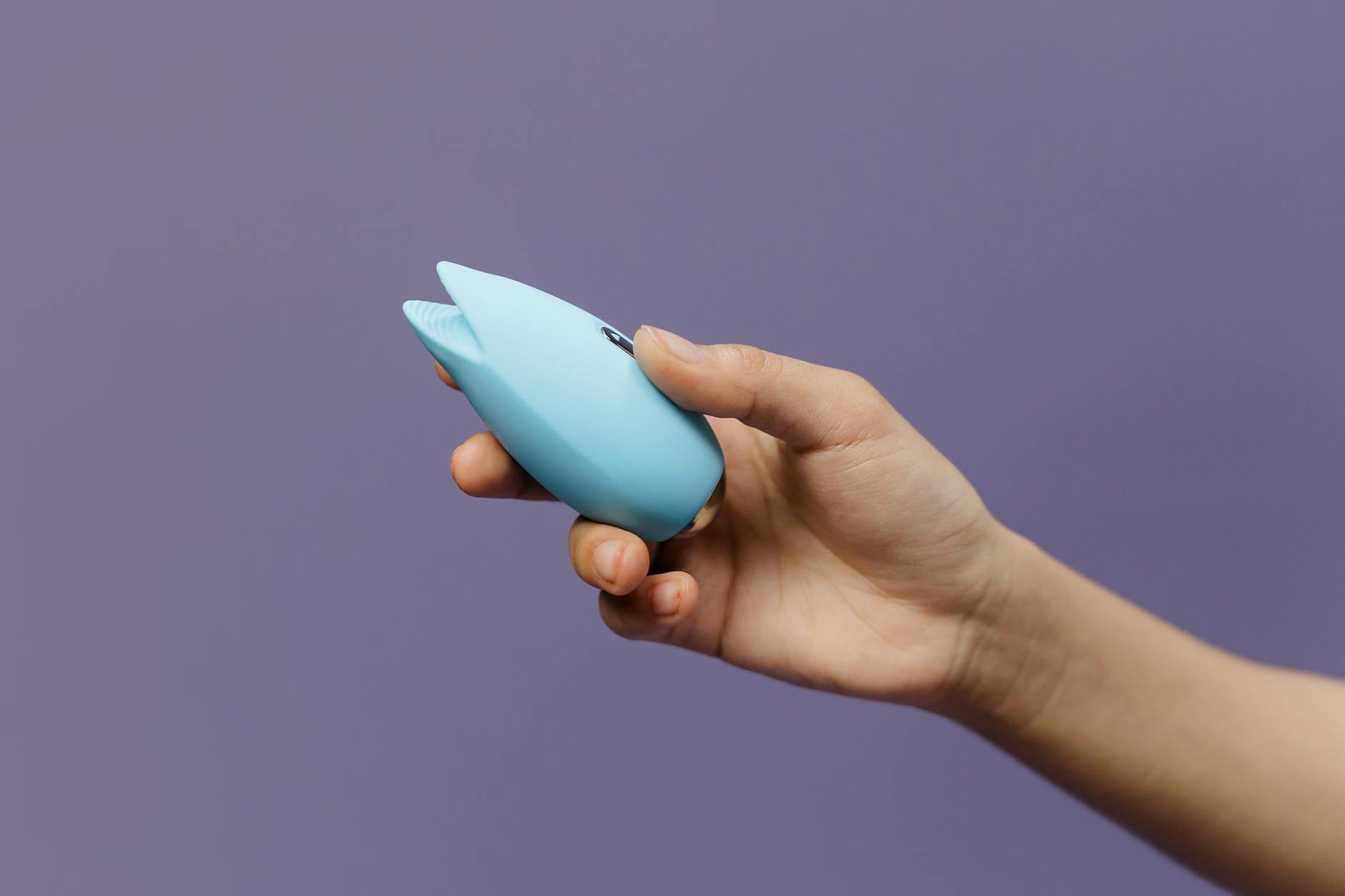
Photo by cottonbro studio on Pexels
Why timing and pacing matter more than intensity
Here's something I notice with clients who struggle with asymmetrical response: they're usually pushing intensity when what they actually need is patience. The quieter side isn't broken. It's not warming up yet.
When you use a traditional vibrator, you're forced into a rhythm that doesn't match your body. With a lemon vibrator, you set the pace. Spend 10 minutes on arousal instead of 3. Let your nervous system settle. Let both sides wake up at their own speed. Often, when people take longer to build arousal, asymmetry decreases or disappears entirely. The slower side catches up.
This also applies to recovery between sessions. If you've been using toys frequently, the more sensitive side might be fatigued while the quieter side is barely engaged. Taking 2-3 days off resets the responsiveness across both sides.
When asymmetry signals something else
Uneven sensitivity is normal. Uneven sensitivity plus pain is not. If stimulation on one side creates discomfort, pinching, or nerve pain (sharp, electrical sensation), that's worth exploring with a pelvic floor physical therapist. Asymmetrical pelvic floor tension or scar tissue can create areas that are tender rather than just less sensitive.
Similarly, if one side is completely numb while the other is responsive, and this is new for you, it's worth checking in with a doctor. Nerve compression or pelvic floor dysfunction can sometimes present this way.
But everyday uneven sensitivity? The kind where one side is just naturally quieter or requires more attention? That's textbook normal. And a lemon clitoral vibrator is designed to work with that reality instead of ignoring it.
Building a practice around your asymmetry
Instead of treating asymmetry as a problem to solve, what if you treated it as valuable information about your body? Start noticing: Which side wakes up first? Which side prefers lighter or heavier pressure? Which patterns feel better on the left versus the right? Does this change depending on where you are in your cycle?
Over time, you'll develop a rhythm that honors your actual body instead of forcing it into a mold. That's when pleasure deepens. You're not chasing a fantasy of perfect symmetry. You're meeting yourself where you are.
A lemon vibrator makes this possible because the precision of air-suction lets you explore these differences without frustration. You're not fighting your toy. You're using it to learn.
People also ask
Is it normal for one side of my clitoris to be more sensitive than the other?
Completely normal. Nerve density varies across the clitoral structure, and most bodies are asymmetrical. One side being more responsive is just anatomy, not a dysfunction. Many people find that asymmetry decreases slightly with longer arousal time as blood flow evens out, but some people maintain asymmetry their whole lives. The lemon suction's advantage is that it lets you work with this difference instead of pretending it doesn't exist.
Why do lemon clitoral vibrators work better for asymmetrical stimulation than traditional vibrators?
Traditional vibrators vibrate your entire vulva at once, which assumes symmetry. A lemon vibrator uses focused suction, so you're controlling exactly where stimulation lands. You can spend more time on your quieter side, adjust intensity per side, and target specific areas. This targeted approach means you're not forcing one side to keep up with the other. You're giving each side what it actually needs.
Should I use the same intensity setting on both sides?
Not necessarily. Start with the same setting, but adjust based on feedback. If one side feels overstimulated while the other is quiet, increase time on the quieter side at the same intensity rather than automatically increasing intensity. Often the issue isn't that one side needs more power. It's that it needs more time to warm up. If intensity adjustments do help, make them gradually and track what works.
Can I use a lemon vibrator if one side of my clitoris is painful or tender?
If the tenderness is just sensitivity, yes. Start with a lighter seal and lower intensity on that side, building gradually. If it's actual pain (sharp, pinching, or nerve-type sensations), this might signal pelvic floor tension or scar tissue, and a pelvic floor physical therapist can help. You can still use a lemon vibrator, but addressing the underlying tension usually makes the experience better overall.
Why does my asymmetry seem worse some days than others?
Hormonal fluctuations matter. On higher-estrogen days, tissue is plumper and more uniformly sensitive. On lower-estrogen days, asymmetry often becomes more noticeable. Also, pelvic floor tension, stress levels, and how much you've used toys recently all affect how pronounced the asymmetry feels. If you track this over a few weeks, you'll start noticing patterns that help you work with your body's natural rhythm.
Does asymmetrical response mean I can't have strong orgasms?
No. In fact, learning to work with asymmetry often leads to more reliable, intense orgasms because you're not fighting your body's actual wiring. By targeting your specific pleasure map instead of assuming symmetry, you're actually aligning with how your body prefers to respond. Many people report that their strongest orgasms come once they stop trying to make both sides respond identically.
The bottom line
Asymmetry isn't a problem. It's information. Your body is telling you what works and what doesn't, where it wants attention and where it wants to rest. A lemon vibrator listens to that feedback in a way that traditional vibrators can't. The precision of air-suction stimulation means you get to design pleasure around your actual anatomy, not around a fantasy of perfect symmetry.
Start by exploring without judgment. Notice what each side prefers. Adjust intensity and positioning based on what you're learning. Over time, asymmetry stops feeling like a flaw and starts feeling like the unique pleasure map it actually is.
If you want to explore your body more deeply or rebuild pleasure after years of pushing through discomfort, that conversation is worth having. Reach out at /contact to connect with a coach who specializes in sexual wellness and body confidence.