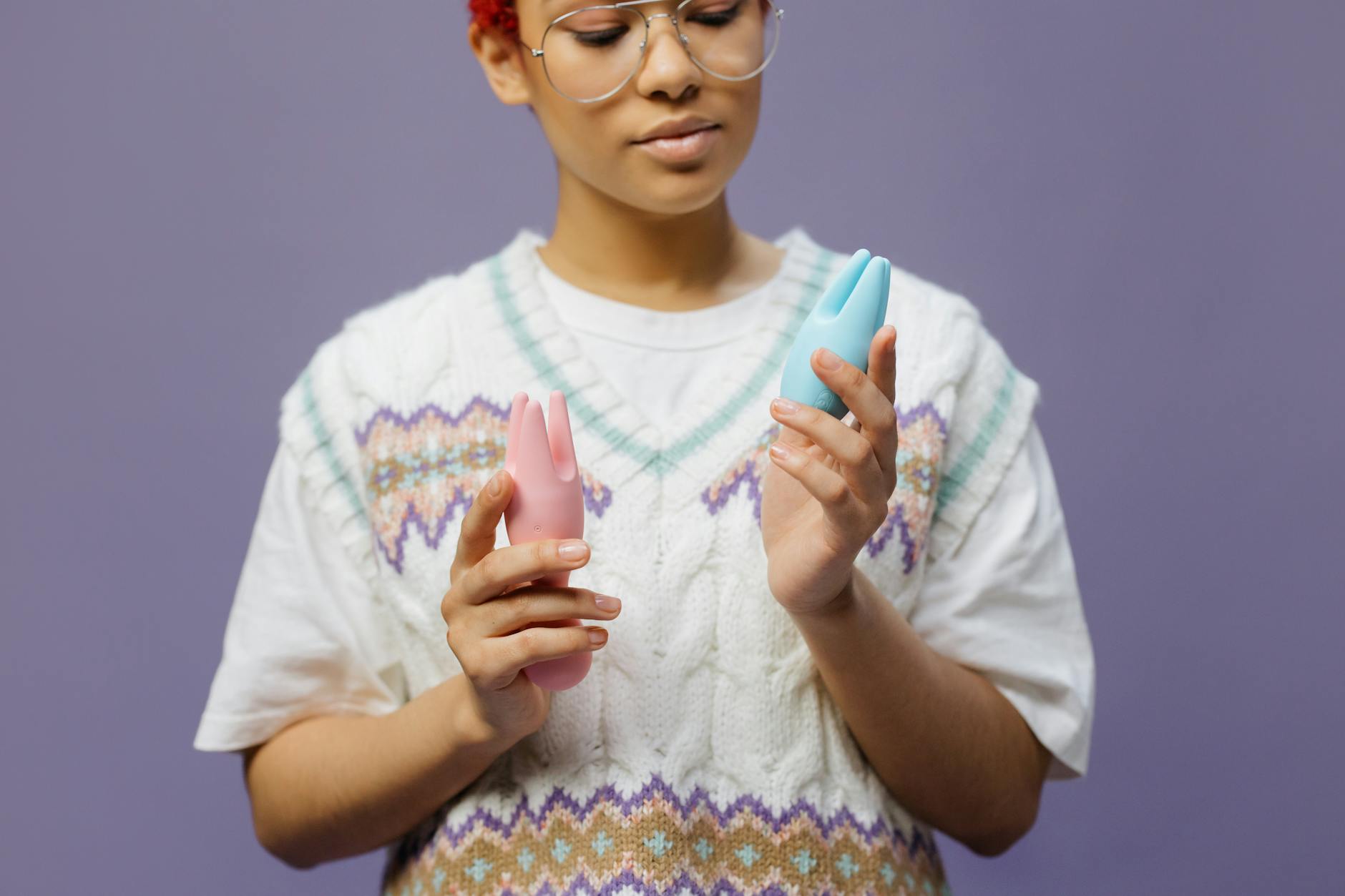
Let's be honest about starting over at 50
You didn't come here because you've been using lemon vibrators since your thirties. You came here because you're thinking about pleasure differently now. Maybe you're newly single. Maybe your long-term partner and you are trying to reconnect. Maybe you've just decided that your own pleasure actually matters, and you're ready to explore it properly.
Starting with a clitoral vibrator over 50 is genuinely different from discovering one at 25. Your body has changed. Your expectations have changed. Your bandwidth for awkwardness has absolutely disappeared. The good news is that all of that makes this cleaner, not harder.
Why 50+ bodies respond differently to stimulation
Estrogen affects how your skin feels and responds to touch. As estrogen drops, your clitoral tissue gets thinner and more sensitive in some ways, less responsive in others. This isn't damage. It's a shift. Your vulva also produces less natural lubrication, which affects how friction feels and what kind of stimulation works best.
Tissue sensitivity matters here. Many people over 50 find that direct vibration on the clitoris feels too intense, too fast, or outright uncomfortable. That's why suction-based tools like a lemon vibrator (the Lem specifically uses gentle air-pulse technology) work so well for this stage of life. You're not fighting against sensitivity. You're working with it.
Your pelvic floor is also doing different work. It has less estrogen support, which changes how muscles engage during arousal. Orgasms may feel different. Arousal takes longer to build. That's not abnormal at 50. It's extremely normal.
The permission piece nobody talks about
I work with couples and individuals, and by far the biggest barrier for people starting out with toys over 50 isn't physical. It's psychological permission. You might feel like you're supposed to be past this. Like wanting pleasure at 50 or 60 is somehow juvenile or desperate or proof that something's wrong with your relationship.
None of that is true. Pleasure is not age-dependent. Your body's capacity for sensation doesn't expire. If anything, you have fewer distractions now. You know yourself better. You have less tolerance for pretending.
If you're partnered, start with a conversation that doesn't center on problem-solving. "I want to explore pleasure differently" is complete. You don't need to attach it to "because you haven't been satisfying me" or "because I'm worried I'm losing interest." Sometimes pleasure exploration is just about curiosity and self-care. That's enough.
Why the Lem design works for 50+ exploration
A lemon vibrator, specifically the air-pulse technology that tools like the Lem use, creates stimulation without the aggressive buzzing you get from traditional vibrators. Instead of vibration moving through the toy into your tissue, suction-based technology creates a gentle pulsing pressure that feels more like oral stimulation than penetrative pressure.
For someone starting out over 50, this matters. You're not fighting against numbness or chasing intensity you might have felt at 30. You're exploring what actually feels good to your body right now. Air-pulse lemon clitoral vibrators let you do that without overwhelming sensitive tissue.
The Lem design is also intuitive. You don't need a PhD in sex toy operation. Place the opening against your clitoris, turn it on at the lowest setting, and let sensation build. There's no insertion, no complicated angles, no guesswork. Simplicity at this stage is a feature, not a limitation.
Starting with the right setting and pacing
Here's where most people over 50 make a mistake: they start at a medium or high intensity because they're nervous and want quick results. Don't do this. Start at setting 1 or 2 on the Lem. Let your body acclimate for 30 seconds to a minute. You might feel nothing. That's fine. Move to setting 3. Give it another minute.
Arousal at 50+ builds slowly sometimes. You're not numb. You're warming up. Think of it like stretching before exercise. You wouldn't sprint into a run. You build into it.
Budget 20 to 40 minutes for your first few sessions. This isn't efficiency. This is permission to actually enjoy the process instead of rushing toward a finish line. Many people over 50 report that their best orgasms come from longer, slower exploration. You're not wasting time. You're setting yourself up for something that actually feels good.
The lubrication reality
You probably already know this, but water-based lubricant is your friend. Not because something's wrong with you. Because thinner tissue benefits from glide, and the Lem glides better when there's moisture involved.
Apply a small amount of water-based lube to the opening of the Lem and to your clitoris. Test the sensation at a low setting first. You might find you don't need much. You might find you want more. There's no right amount. Your comfort is the entire metric here.
If you're using the Lem solo, this is straightforward. If you're exploring with a partner, lube becomes part of the play, not a clinical insert. It can be sexy. Let it be.
What sensation actually feels like when you're starting
You might expect an orgasm to feel like a firework. At 50+, especially the first time using a lemon vibrator, it might feel more like a wave. A gentle building pressure that crests and releases. Some people describe it as more internal than external. Some describe it as longer but less explosive than they remember.
That's all fine. You're not chasing your 30-year-old orgasm. You're discovering your 50-year-old one. They're different experiences, and honestly, the 50-year-old version often feels more grounded because your whole body is more present.
If you don't orgasm the first few times, that's also completely normal. You're introducing your body to new sensations. Neural pathways are rewiring. Some people need three or four sessions before their nervous system relaxes enough for climax. Patience here is actually a gift to yourself.
Solo versus partnered exploration
If you're exploring alone, you have complete control. No pressure, no performance anxiety, no one else's timeline. This is actually the ideal way to learn what works because you can pause, adjust, restart, all without managing someone else's experience.
If you're exploring with a partner, establish a signal system before you start. Not a safeword necessarily, but a way to say "slower" or "different setting" or "pause." Partners sometimes want to watch. Some people find that grounding, others find it distracting. There's no correct preference. What matters is that you both know the plan.
Many couples over 50 find that introducing a lemon vibrator actually softens sex because it removes the pressure for one partner to provide all stimulation. Suddenly there's a tool that helps both people feel good. That's genuinely powerful after decades together.
The body confidence piece
If you haven't looked at your vulva closely in years, you might be surprised by how it looks now. Skin changes. Color changes. Shape can shift with aging and hormonal changes. All of this is normal. None of it makes you less deserving of pleasure.
When you're starting with a lemon vibrator, you're spending time with your own body in a way you might not have in a long time. Let that be okay. Touch the skin around your clitoris. Notice texture. Notice what feels good. This isn't vanity. It's reconnection.
Many people over 50 who start using clitoral vibrators report that body confidence actually improves because they're engaging with their body from a place of curiosity and care instead of criticism.
When to seek additional support
If you experience pain (not sensitivity, but actual pain) when using a lemon vibrator, talk to a menopause-informed doctor or gynecologist. Genitourinary syndrome of menopause is real and treatable. Topical estrogen creams can change things dramatically in weeks.
If desire is completely absent and you're interested in exploring it, a therapist trained in midlife sexuality can help untangle whether it's physiological, relational, or both. Rebuilding pleasure after hormonal changes is a whole separate conversation that sometimes benefits from professional guidance.
If you're partnered and your partner isn't interested in your exploration, that's a conversation worth having with a couples therapist. Not because there's something wrong with wanting pleasure at 50, but because mismatched expectations about intimacy are easier to address with help.
The bigger picture at 50 and beyond
You're not too old. Your body's not broken. Pleasure doesn't have an expiration date. Starting with a lemon vibrator over 50 is just you deciding that your own pleasure, your own exploration, your own body matters. That's not a small thing.
The Lem design, with its gentle air-pulse technology and straightforward operation, is built for exactly this moment. Not for twenty-year-olds figuring out what gets them off. For people like you. People who know themselves, who respect their bodies, who are ready to explore what feels good without apology.
Start slow. Use lube. Give yourself time. And know that what you're doing right now—exploring pleasure intentionally, at your own pace, in your own way—is genuinely valuable. You deserve that exploration. Your pleasure matters.
People also ask
Is it normal to feel nothing the first time using a clitoral vibrator over 50?
Completely normal. Arousal at 50+ often builds more slowly than at younger ages, and you're introducing your body to a new type of stimulation. Your nervous system is literally learning a new sensation. Most people feel something by the third or fourth session. If you feel nothing after five or six sessions and you're using lube and giving yourself 20+ minutes, talk to a doctor. Sometimes low sensation is related to medications or hormonal levels, and both are addressable.
Can I use a lemon vibrator if I have vaginal dryness?
Yes, and water-based lubricant is essential. Apply it to both the opening of the Lem and to your clitoris. Dryness doesn't mean you can't use a vibrator. It means you need moisture for comfort. If dryness is severe or causing pain, mention it to your doctor. Topical estrogen creams or vaginal moisturizers can help significantly and work alongside any toy exploration you're doing.
How do I start a conversation with my partner about using a lemon vibrator?
Keep it simple and framing-agnostic. "I'm curious about exploring pleasure differently, and I want to try a clitoral vibrator" is complete. You don't need to apologize for it, explain that it's not about them, or position it as a fix for anything. If your partner expresses discomfort, listen to the actual concern (sometimes it's vulnerability about their role, sometimes it's just unfamiliarity). A couples therapist can help if this conversation gets stuck.
What if orgasms feel different with a lemon vibrator than they used to?
That's expected. Orgasms change with age and hormonal shifts. They might feel longer, shorter, more internal, more external, or just plain different. All of that is your body adapting, not evidence that something's wrong. Some people over 50 report their most intense orgasms ever come from using air-pulse technology like the Lem. Different doesn't mean worse.
How long should my first session be?
Thirty to forty minutes is a good target, but there's no hard rule. Give yourself enough time to get comfortable, to try different settings, and to let arousal build. If you're anxious about the process, that time helps your nervous system settle. If you find yourself enjoying it and want to go longer, that's fine too. The point is removing the pressure to rush toward a specific outcome.
Should I use a lemon vibrator alone first, or is it okay to explore with a partner?
Both are valid. Solo exploration gives you total control and removes performance pressure. Partnered exploration can deepen intimacy if you're both on the same page. If you're partnered and nervous, solo exploration first can help you learn what feels good so you can show your partner rather than figuring it out in real time together. Either path works.