
Let's name the real problem
You've probably heard that your clitoris is "incredibly sensitive" and "packed with nerve endings." Congrats, you know the biology. What nobody tells you is that for some people, that sensitivity doesn't feel good. It feels sharp, irritating, wrong, or unbearably intense the moment anything touches it directly.
That's not broken. That's not unusual. And a lemon vibrator changes the entire conversation.
Why direct clitoral touch can feel wrong
Three main reasons this happens, and honestly, it's usually a combination.
First: the tissue itself is delicate. Unlike the vagina or labia, the clitoral glans has no protective layer of tissue over those nerves. Direct pressure, friction, or vibration hits them without any buffer. For some nervous systems, that's overwhelming in the worst way.
Second: your nervous system might be wired to interpret direct clitoral touch as uncomfortable or threatening rather than pleasurable. This is partly genetic, partly learned (messages you absorbed about your body or sex, sometimes from culture, sometimes from past experience). Your brain isn't broken. It's just interpreting sensation differently than the textbook says it should.
Third: numbness paradox. Some people have the opposite problem. Direct vibration numbs the clitoris after a few seconds, which is equally frustrating. Your body habituates to the stimulus so fast that intensity becomes irrelevant.
All three of these are real. All three respond to a different approach.
How suction changes the game
Here's what makes a lemon vibrator fundamentally different from a traditional vibrator. Instead of buzzing directly against tissue, suction creates a rhythmic gentle pull. Think of it less like a vibrator and more like a soft mouth. The sensation is distributed across a wider area, the pressure is gentler, and the rhythm feels different to your nervous system.
Suction doesn't numb as fast because the tissue isn't experiencing constant friction. The rhythm creates anticipation. Each pulse feels like a question your body is learning to answer. For people who've hated direct vibration, suction often feels like the first time clitoral touch has ever made sense.
This is why you see so many "I thought I couldn't enjoy clitoral toys until I tried a lemon vibrator" conversations. The device isn't different because it's magical. It's different because the mechanism itself solves the original problem.
Starting when direct touch feels impossible
Honestly though, even suction can feel intense if you've never been comfortable with clitoral stimulation. So start smaller.
Do this first: Spend time with the lowest setting, fully clothed, with underwear on. Just get used to the idea that something is creating sensation there. The goal is zero arousal right now. You're just getting your nervous system familiar with the feeling.
Then move to: clothed, no underwear. Same lowest setting. Again, the point isn't pleasure yet. It's habituation. You're teaching your nervous system that this sensation isn't a threat.
Then: skin contact, but with the device hovering or barely touching rather than creating suction. Most lemon vibrators have adjustable intensity. You're using the absolute minimum here. Let your brain register sensation without the actual pull.
Only after that do you gradually increase intensity or create actual suction. And even then, you might spend weeks at level 1 or 2 before moving up. That's not wrong. That's your nervous system working exactly as it should.
The role of arousal in this equation
Before you use the device in any serious way, you need baseline arousal. Not orgasm-level arousal. Just enough that blood is flowing to the area, tissue is slightly engorged, and your nervous system is in a more receptive mode.
Spend 15 to 20 minutes on things that actually turn you on. Reading something sexy. Thinking about a scenario. Touching other parts of your body that feel good. Moving your hips. Whatever gets you to "mildly interested" rather than neutral.
Then introduce the lemon vibrator. This shifts the entire context. The device isn't an aggressor. It's an extension of arousal that's already happening.
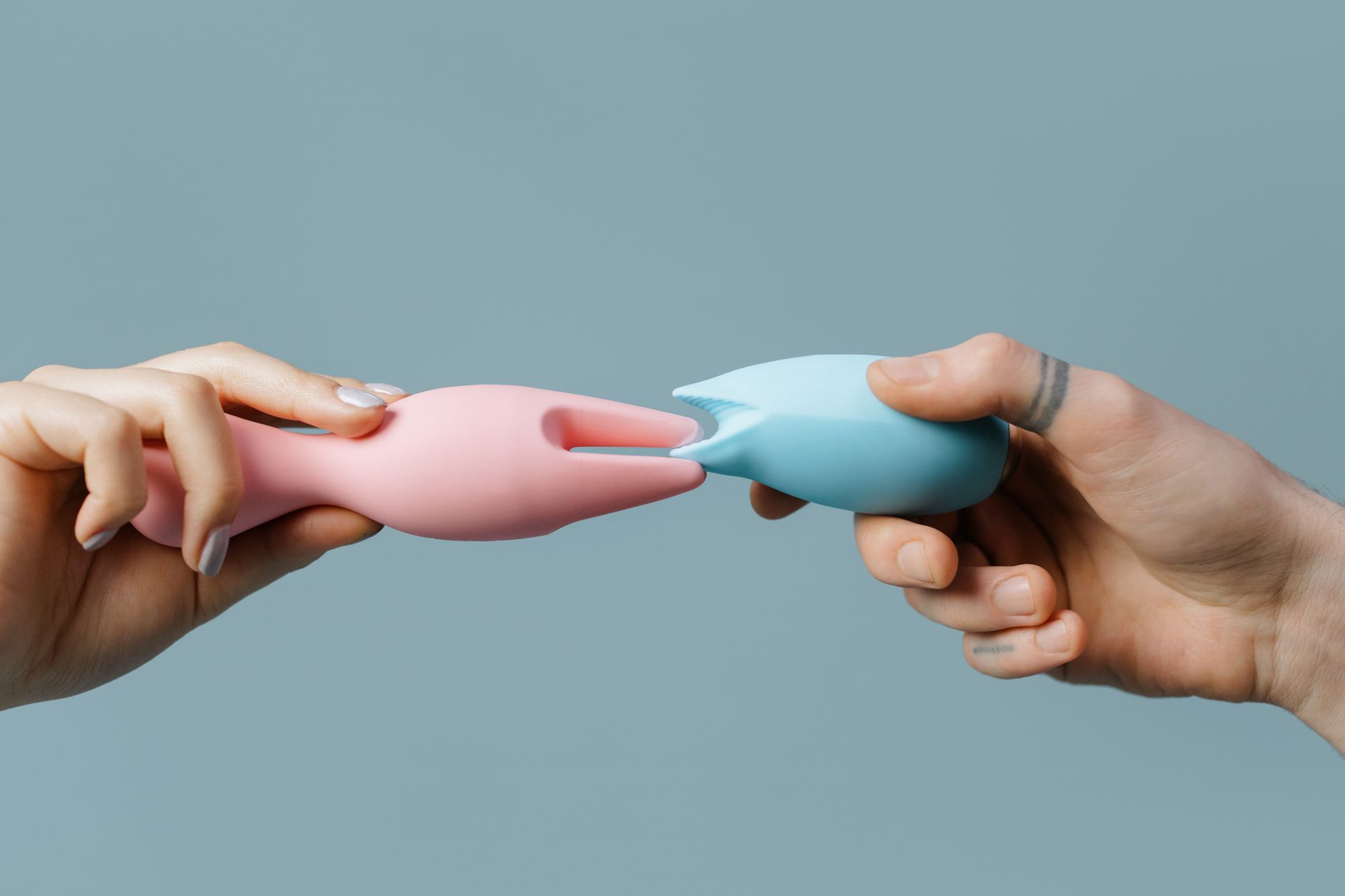
Photo by cottonbro studio on Pexels
Positioning matters more than you think
If you're coming to clitoral toys from a place of discomfort, angles are everything. Direct head-on pressure is probably what made you hate this before. So don't do that.
Try approaching from the side. Angle the suction cup so it's creating sensation on the left or right side of your clitoris rather than dead center. This reduces intensity and distributes it differently.
You can also angle it from above, targeting just the hood area rather than the glans itself. The clitoris extends internally, and that whole region has nerve density. You don't have to go for the most obvious spot.
Experiment with these positions over multiple sessions. What feels tolerable or even good one day might feel different another day. This isn't inconsistency. It's your nervous system's normal variation.
Building tolerance without forcing it
The worst thing you can do here is push yourself. "I should be able to enjoy this like other people do, so I'm going to white-knuckle through discomfort for the next month." That just embeds the original discomfort deeper.
Instead: Use the lemon vibrator for 5 minutes at a time, if that's all that feels good. Stop before it gets unpleasant. Do this 2 to 3 times a week. Your nervous system will gradually calibrate.
Notice what changes week to week. Maybe week one, level 1 feels neutral. Week three, level 1 feels slightly good. That's progress even though it doesn't look like much.
If you hit a week where nothing feels different, that's okay too. Some weeks are flat. Take a break for a few days and come back.
When to involve a partner (if you have one)
If you're exploring this solo, you've got full control and zero performance pressure. That's ideal for rewiring your relationship with clitoral sensation.
If you eventually want to bring a partner into this, frame it accurately. "I'm learning to enjoy clitoral touch, and I need you to know that means slow, low-intensity, and me directing the whole thing." Not "My body is broken and needs fixing." Not "I'm trying to be better at sex." Just the truth: "This is how my pleasure works."
Your partner's job is to follow your lead, not to convince you that you should enjoy something more intense. If they can't do that, that's information about the partnership, not information about your body.
The breakthrough moment (it usually looks small)
You're not necessarily waiting for an orgasm. Some people with clitoral discomfort take months to reach that. The real breakthrough is when sensation stops feeling wrong and starts feeling like actual input. When the lemon vibrator registers as pleasure rather than confusion or discomfort.
That might be month two or month six. It doesn't matter. You're rewiring years of learned response. That takes time.
Once you're there, building from gentle suction to gradually higher intensities becomes possible because the foundation has changed. The device isn't an assault anymore. It's a tool that your body actually wants.
FAQ: Questions people actually ask
Can I damage my clitoris by avoiding direct stimulation?
No. Your clitoris isn't a muscle that atrophies. It's perfectly healthy whether you use direct vibration, suction, indirect pressure, or nothing at all. There's no "use it or lose it" requirement for pleasure.
Does this mean I'll never enjoy traditional vibrators?
Maybe. Some people rewire their nervous system over time and eventually enjoy direct vibration alongside suction. Some people don't, and that's completely fine. You don't need to enjoy every type of toy to have a rich sex life.
How long does it usually take to feel comfortable?
There's no standard timeline. Some people notice a shift in 2 to 3 weeks. Others take 2 to 3 months. A few take longer. Your nervous system's pace isn't a reflection of how "normal" you are. It's just how long your particular wiring needs.
What if I still hate it after giving it time?
Then you hate it, and that's the answer. Clitoral toys aren't mandatory for a good sex life. Some of the most satisfied people we know never use them. Your pleasure doesn't have to look like anyone else's.
Can I use a lemon vibrator through underwear or clothing?
Yes, and honestly, starting this way is smart. You get sensation without intensity, and the barrier reduces overwhelm. Many people spend weeks or even months enjoying the device only through fabric before moving to skin contact.
Is there something wrong with me if direct clitoral touch feels bad?
No. Your nervous system is wired the way it's wired. That's not a defect or a trauma response you need to "fix." It's just how your body processes that particular sensation. You get to work with it instead of against it.
The long view
If you've spent years thinking clitoral toys or clitoral stimulation "weren't for you," a lemon vibrator's suction design can genuinely change that narrative. Not by forcing your body to accommodate intensity it doesn't want, but by offering a completely different kind of sensation.
Start small, move slowly, and let your nervous system set the pace. Your pleasure isn't on a timeline. When you approach it with patience instead of force, that's when the real shifts happen. Check out more strategies for how to use a lemon vibrator when touch feels too sensitive or overwhelming or explore how to choose a lemon vibrator when you're new to clitoral toys if you want more foundational guidance.
Your body deserves an approach that works for it, not an approach that forces it. A lemon vibrator can be exactly that.