
Let's get real about the timing
You've been dating three weeks. Or maybe three months. At some point, the thought crosses your mind. You want to bring a vibrator into the bedroom with this person, but the script doesn't exist yet. There's no manual for this part. Most of us learn by getting it wrong the first time.
Here's the thing: introducing a clitoral vibrator early isn't awkward if you frame it right. It's not an indictment of your partner's skills. It's not a signal that something's missing. It's actually the opposite. You're saying "I know what I like, I'm comfortable asking for it, and I want us to explore this together." That's confidence. Most partners find that attractive.
Why the conversation feels harder than it should
There's an invisible script we all grew up with. Sex should happen spontaneously. Toys are for people who have "problems." Asking for what you need means you're being critical. None of that is true, but the echo of it lingers.
Your nervous system is picking up on vulnerability. You're about to say "here's something intimate about how my body works." That's genuinely brave. But vulnerability and awkwardness aren't the same thing. Awkwardness is what happens when there's a gap between what's being said and what's expected. Close that gap by being clear, and the awkwardness dissolves.
The setup conversation (not the "big talk")
Honestly, you don't need a sit-down. The worst move is turning this into A Conversation. That builds it into something it isn't. Instead, bring it up naturally when sex is already on the table.
Try something like: "Hey, I love what we're doing. I also have something that feels really good to me, and I'd like to use it with you if you're open to that." That's it. You've named the thing, you've expressed that you like what's happening, and you've invited them in.
The key phrases that work:
- "I want to show you something I enjoy."
- "There's something I'd like to try with you."
- "I get a lot out of this, and I think it could be fun together."
What doesn't work:
- Apologizing. ("Sorry, is this weird?") Confidence is attractive.
- Over-explaining. ("I read this article and it said women need clitoral stimulation and...") They don't need the TED talk.
- Framing it as a fix. ("You can't get me there alone.") That lands like criticism, even if it's not.
What actually happens when you introduce the Lem
Let's say they're into it. You've got the device out. Now what.
First, you control it. You're not handing it to them and saying "go figure it out." That's the move that creates real awkwardness. Instead, you use it on yourself first, while they watch. This does three things: it shows them how it works, it demonstrates that you're comfortable with your body, and it gives them permission to be turned on by seeing you get pleasure.
Start at a lower intensity. If you're using the Lem, that means patterns one or two. Let them see the rhythm. Let them see what your face does. This part is actually incredibly intimate, and most partners respond to it by feeling closer, not further away.
After a minute or two, you can hand it over. Give them a simple instruction: "Just keep doing what you're doing, I'll tell you if I want anything different." You're staying in charge of the narrative. You're not putting them in charge of your pleasure.
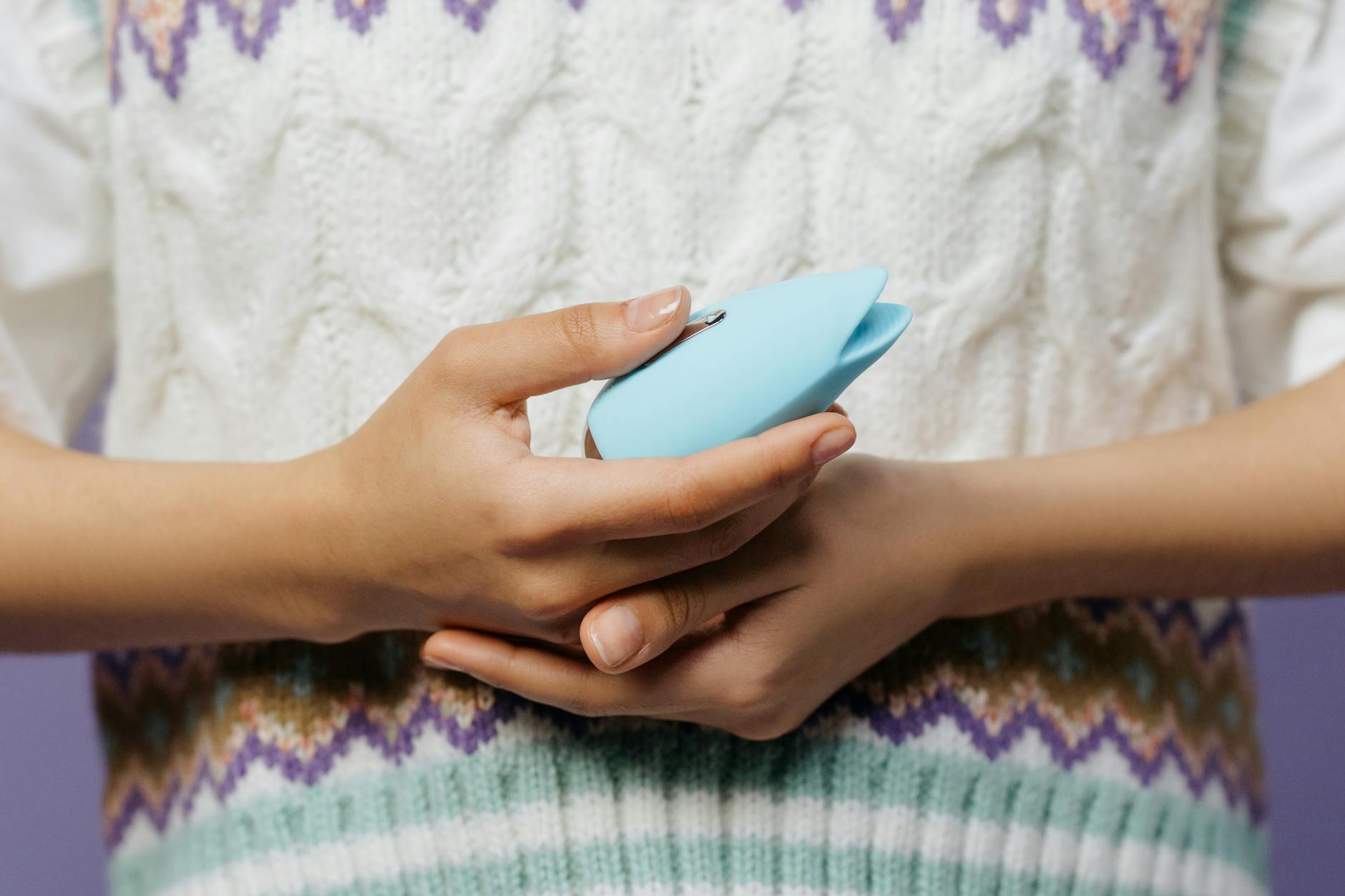
Photo by cottonbro studio on Pexels
The second time is easier
After the first time, the weirdness is gone. You've already done the thing. Now it's just part of your repertoire. The second time, you can be more playful. You can experiment with timing, intensity, and how it combines with other touch.
Many partners get curious after the first time. They start asking questions. How long have you been using this? Do you use it differently alone than with them? What feels best? These conversations are actually gold. They mean they're thinking about your pleasure, not feeling replaced by the device.
This is also the moment to talk about what works. Does it feel better when they're inside you and you're using the vibrator? Do you prefer it during foreplay? Do you want it just before you come? These details matter because pleasure is specific. You deserve a partner who wants to know.
When they need reassurance (and how to give it)
Some partners worry that a vibrator means they're not enough. Here's the truth to offer them: "You're not a vibrator. A vibrator can't hold me, kiss me, or be present with me. This just helps my body get to where I want to go, and I want you there when I get there."
That's not lip service. It's actually true. A clitoral vibrator is a tool, not a replacement. It's like saying that because you use a shower, you don't want to swim in the ocean. They're different experiences entirely.
If they're still hesitant, give them time. Not everyone is ready immediately. But also don't shrink yourself to make them comfortable. Your pleasure isn't negotiable. What's negotiable is how and when you explore it together.
The practical stuff nobody mentions
Use it during actual sex, not just as foreplay. Some people introduce vibrators only as a warm-up, which can send the wrong message. (Like you need to get yourself started, then they take over.) Instead, use it during penetrative sex if that's happening, or during partnered oral. This shows that the vibrator and your partner's touch are a team, not competitors.
Keep it accessible. Don't hide it in a drawer under three layers of clothing. Have it on the bedside table or somewhere within reach. If it feels clinical, you make it feel clinical. If it's just part of the landscape, it becomes normal faster.
Talk about sensation during. "Does this feel good?" "Do you like it like this?" These check-ins aren't awkward if you're already being intimate. They're just communication. Partners appreciate knowing what's working.
The one thing that backfires
Using a lemon vibrator (or any toy) as a way to avoid difficult conversations about desire or connection will blow up. If you're introducing it because you're bored, or because you're checking out emotionally, that's not a toy problem. That's a relationship problem. The device becomes the scapegoat.
But if you're bringing it in because you want more pleasure, more exploration, more fun together, it actually deepens things. You're saying "I trust you with my desires. I want you in this experience." That's an invitation, not a rejection.
FAQ: New partners and vibrators
When is too early to bring up a vibrator with someone new?
When you're having regular sex, it's not too early. That could be three weeks or three months. The timing isn't about a calendar. It's about when you feel safe enough to be vulnerable. If you're not sure, that's your signal to wait a bit longer. You want to bring this up when you already trust them somewhat, not in the first-date phase.
What if they say no?
Then you have a choice. You can respect that boundary and leave it alone, or you can ask why. Sometimes "no" is "not right now." Sometimes it's "I don't understand why you'd want that." Those are different conversations. If it's a hard no and you really want to explore with a partner, that's information about compatibility.
Can I use a lemon vibrator while my partner is inside me?
Absolutely. In fact, lots of people find that clitoral stimulation during penetration feels incredible. There's no rule against it. The only rule is that it feels good to both of you. If your partner is worried about pressure or sensation, start slow. Lower intensities, check in frequently.
Do I have to tell them I've used it before?
You don't owe a detailed history. If they ask, "Have you used toys before?" you can be honest without over-explaining. "Yeah, I have. I know what works for me." That's complete. You don't need to narrate your entire sexual past.
What if they want to control it but I'm not ready?
Tell them. "I want to get used to this with you first, and then we can play around with it more." That's a completely reasonable boundary. You're introducing a new element into your sexuality together. You get to set the pace.
Will a clitoral vibrator like the Lem make me less sensitive to my partner's touch?
No. Vibrators don't numb you or desensitize you long-term, and they're especially unlikely to if you're varying sensation and not using the device in isolation every single time. Mix it up. Use hands, use mouths, use vibration. Your body stays responsive when the input stays varied.
The actual goal here
Introducing a lemon clitoral vibrator with a new partner is just communication dressed up as vulnerability. You're saying "here's what I know about myself, and I'd like to share this with you." Most partners who are worth being with will respond with curiosity, not judgment. And if they don't, that tells you something important about whether this person can hold your pleasure seriously. Your desire matters. How you explore it together matters. And a conversation that feels awkward in your head usually feels totally normal once you actually have it.