Let's start with the real problem
Libido mismatch is not about sexual dysfunction. It's about friction in the rest of your relationship disguising itself as a bedroom problem. One of you wants sex twice a week. The other wants it once a month. Neither of you is broken. But the person wanting less feels pressured and guilty. The person wanting more feels rejected and lonely. A lemon clitoral vibrator won't fix the underlying friction, but it can stop the resentment from calcifying while you work on the actual issue.
I've worked with hundreds of couples where desire frequencies don't align, and I can tell you this: the couples who survive this transition are the ones who separate "I need more sexual release" from "You don't want me." Those are two completely different conversations, and they require different tools.
The neurobiology of mismatched desire
When libido frequencies don't match, both partners end up in a stress loop. The higher-desire partner initiates and gets rejected. Rejection triggers a cascade in the brain that reads as threat (not drama, actual neurobiology). The lower-desire partner feels that urgency as pressure and retreats further. Over time, the bedroom becomes the place where both people feel unsafe. A lemon vibrator can't rewrite your brain chemistry, but it can short-circuit that loop by giving the higher-desire partner a way to get sexual release without triggering the other person's shame response.
Here's what changes: instead of initiation creating friction, the ritual becomes something you can do together without the same stakes. The lower-desire partner isn't being asked to match an intensity they don't feel. The higher-desire partner gets the physiological release they need. The bedroom stops being a battle zone.
Why a lemon clitoral vibrator works for this specific dynamic
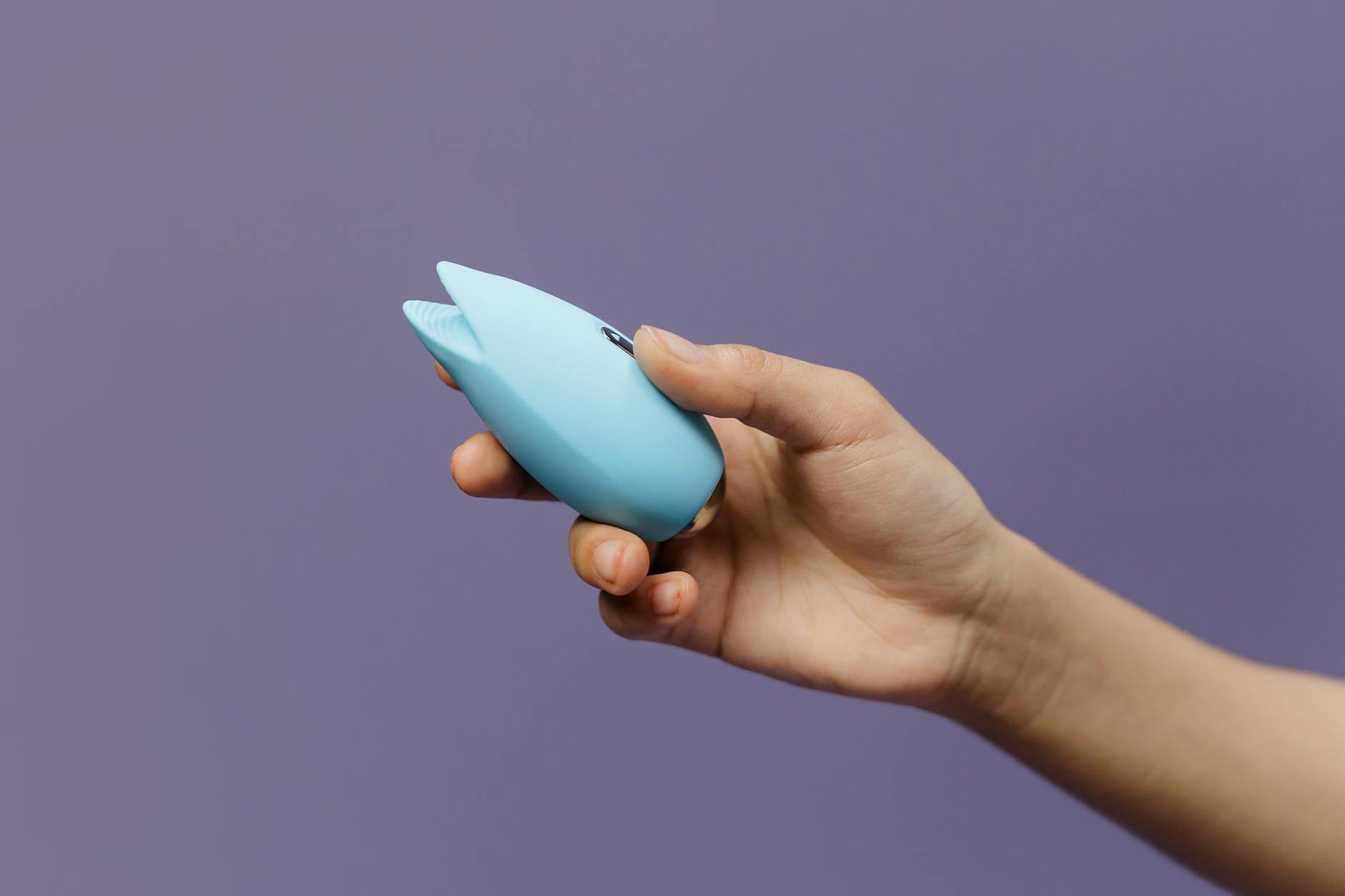
A lemon vibrator operates through suction and pulsation rather than traditional vibration. This matters when desire is mismatched because it allows for a gentler, more nuanced experience. If the lower-desire partner is willing to be present during your solo play or to incorporate touch while you use the toy, the suction technology creates intimacy without demanding the kind of full-body engagement that can feel exhausting when libido is already depleted.
The Lem vibrator, for example, uses air-pulse technology that mimics oral stimulation. Neurologically, this activates different pleasure pathways than a standard wand vibrator. For people who are touch-fatigued or overstimulated (which is often what "low libido" actually means), this pattern of stimulation can feel less demanding.
Also, practically speaking, a lemon clitoral vibrator is designed for solo use or for partnered use where your partner is contributing touch. It doesn't require simultaneous penetration or the kind of choreography that makes low-desire partners feel like they're watching rather than participating.
The conversation that has to happen first
Before you bring a toy into the situation, you need to have a conversation that's not about sex. Sit down when you're not naked, not in the bedroom, and not in crisis mode. Use this framework:
Higher-desire partner says: "I've been feeling like my sexual needs aren't going to be met in this relationship, and I'm starting to feel resentful. That's on me to manage, not on you to fix. But I need us to find a way that works for both of us. I'm thinking about exploring this with a toy so I can take some of the pressure off you and also feel like my body's needs matter."
Lower-desire partner responds with honesty: "I hear that. And I feel [guilty / pressured / broken / exhausted]. Here's what I actually need: [more time before sex / less frequent initiation / reassurance that you still want me / a different time of day]."
Then you problem-solve together. The toy isn't a workaround for this conversation. It's a tool you use after you've acknowledged the real issue.
The practical setup that actually works
Once you've had that conversation, here's how to integrate a lemon clitoral vibrator in a way that builds connection instead of highlighting the gap:
Option 1: Parallel pleasure. You use the toy on yourself while your partner reads, watches, or sits nearby. This is not a performance. The lower-desire partner isn't being asked to do anything. They're just present. Over time, proximity can lead to touch, but it doesn't have to. The point is that sexual pleasure is no longer something that requires the other person to push their own desire past its natural threshold.
Option 2: Collaborative slow. Your partner uses the lemon vibrator on you while you're together. This flips the dynamic. They're not being asked to want sex. They're contributing to your pleasure in a specific, bounded way. For many lower-desire partners, this feels less like demand and more like care.
Option 3: Scheduled and transparent. Some couples find that knowing when sexual release is going to happen removes the element of surprise rejection. "I'm going to use my toy on Tuesday and Thursday evenings" becomes as normal as "I'm going out for a run." The lower-desire partner isn't blindsided. The higher-desire partner's needs are predictable. Resentment drops.
The conversation during matters too
If your partner is present while you're using a lemon vibrator, don't narrate your pleasure in a way that's designed to turn them on. That defeats the entire purpose. Instead, you might say: "I'm going to do this now. You can join me in whatever way feels good, or you can be here while I do my thing. Either is fine."
If they choose to be present but not participate, don't interpret that as rejection. They're showing up. That's enough.
If they ask questions ("How does that feel?" or "What setting is that?"), answer matter-of-factly. You're normalizing your own sexuality, not performing it.
What this does (and doesn't) fix
Using a lemon clitoral vibrator won't make your partner suddenly want sex more often. It won't make you stop wanting it so much. But here's what it does do:
It decouples your sexual release from your partner's willingness or enthusiasm. You're no longer putting all your physical need into one channel and then resenting them when they can't match your frequency. The pressure lifts. When pressure lifts, intimacy often returns naturally, though maybe in a different shape.
It gives the lower-desire partner permission to stop performing desire they don't feel. Over time, that permission can actually allow real desire to surface. Sometimes libido mismatch isn't about fundamental incompatibility. It's about one person's nervous system being so activated by pressure that desire is completely unavailable.
It makes the bedroom a place where both people's bodies are okay instead of a place where one person is always asking and the other is always defending.
When you need more than a toy
If libido mismatch is paired with other relationship friction (resentment about household labor, emotional distance, a partner who's depressed or on medications that kill libido), a lemon vibrator is a useful bandage, not a cure. Get a couples therapist who specializes in desire discrepancy. There are frameworks (Gottman, EFT) that work specifically on this.
If the lower-desire partner is avoiding sex due to pain, trauma, or medical reasons, address that first. A toy won't help if the root cause is physical or psychological pain.
If one of you is checked out of the relationship entirely, no vibrator is going to rebuild that. You need to do the harder work of deciding if you both want to be there.
But if you're two people who love each other and your bodies just want different things, a lemon vibrator can be the thing that stops the spiral. It's not romantic. It's practical. And sometimes practical is exactly what connection needs.
FAQ
Will using a toy make my partner feel less needed?
Not if you frame it right. You're not saying "I need this instead of you." You're saying "I need this so that you don't have to perform desire you don't feel." There's a huge difference. Most lower-desire partners, when they understand that a toy is relieving pressure off them, actually feel relief.
Can I use a lemon vibrator during partnered sex if our libidos are mismatched?
Absolutely. Some couples find that incorporating a lemon clitoral vibrator during sex actually helps the lower-desire partner get there faster, which means less time spent in an activity that feels obligatory. This can be a game-changer for couples where one person needs a longer warm-up and the other gets tired during foreplay. The toy intensifies sensation without requiring additional effort from your partner.
What if my partner is completely opposed to toys?
That's a separate conversation. Opposition often comes from shame, fear of comparison, or a belief that toys mean something is broken. You might try saying: "I'm not asking you to change anything. I'm asking for permission to take care of myself in a way that takes pressure off you." Sometimes that reframe shifts things. If they're still opposed after an honest conversation, you're dealing with a values mismatch that might need a therapist, not a toy.
Is libido mismatch a reason to break up?
Not automatically. But it's worth asking: can you both accept that you want different frequencies and find a system that works? Or are you going to keep interpreting different desire as rejection? If it's the latter, incompatibility might be real. But many couples with different libidos build long-term relationships by decoupling desire from intimacy and finding other ways to stay connected.
How often should we be using a lemon vibrator if we have mismatched libidos?
Whatever frequency the higher-desire partner needs to feel satisfied without resentment building. That might be weekly. It might be multiple times a week. There's no "normal." The goal is: does the higher-desire partner feel less desperate? Does the lower-desire partner feel less pressured? If both answers are yes, you've found the right rhythm.
Can a lemon vibrator actually bring us closer together?
Yes, but not the way you might think. It doesn't create passion you don't feel. But it can remove the defensive armor you both build when desire is constantly misaligned. When the pressure to perform or to reject lifts, people often soften. That softening can let actual intimacy back in. For some couples, that's the beginning of a real reconnection.