
Here's the problem nobody talks about
You know that feeling when your clitoris goes numb halfway through? That's vibration fatigue. Traditional vibrators work by shaking at high frequencies. After 10-15 minutes, those nerves basically tap out. They stop responding, sensation flattens, and you're left grinding away at a toy that used to feel amazing but now feels like basically nothing.
The frustrating part: it's not you. It's not your body failing. It's physics.
Lemon clitoral vibrators work differently. Instead of pure vibration, they use suction. That's a fundamentally different stimulus. Your nerve endings respond differently to rhythmic suction than to vibration. The result: sustained sensation over 30, 40, sometimes 60 minutes without that numbing crash.
Why vibration fatigue happens first
Your clitoral nerve endings adapt. Fast. When a single stimulus arrives repeatedly at the same frequency, your nervous system learns to filter it out as "not important." It's the same reason you stop noticing your shirt against your skin after the first five minutes. Your brain literally turns down the volume.
Vibration, by its nature, is repetitive and rhythmic. Eight thousand vibrations per minute sounds intense until your body realizes it's predictable. Then it's just white noise.
Suction, by contrast, creates a rhythmic pressure change rather than pure motion. Your nerves perceive that differently. It doesn't trigger habituation the same way. That's why many people report that lemon vibrators feel fresh even after extended use when a traditional vibrator would be dead in the water.
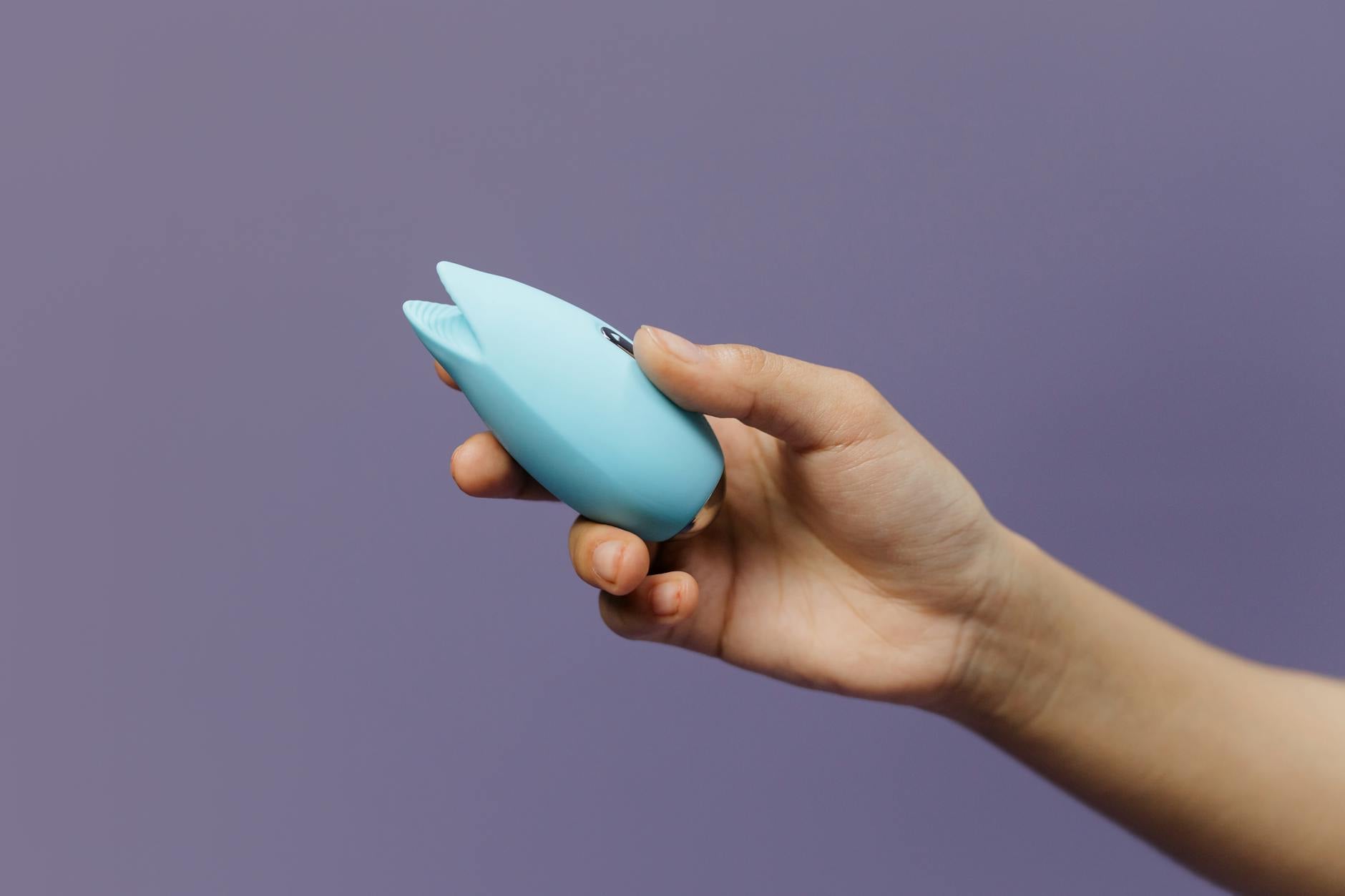
Photo by cottonbro studio on Pexels
How to set yourself up for longer sessions
Three things matter before you even turn on your lem vibrator.
Start with low arousal. This sounds backward, but it's crucial. If you jump straight to your lem at full intensity when you're already at a 7 out of 10 arousal, you'll crest fast and crash. If you begin the session at a 4 or 5, you have runway to build. Spend 10 minutes with your hands, a partner's touch, or erotic content first.
Use a water-based lubricant. Suction works better with a thin layer of lube. It creates better seal, better sensation, and protects your tissue. More importantly, lube changes how the suction feels. It becomes less intense initially, which means you can sustain it longer before adaptation kicks in.
Position yourself comfortably. Seriously. If your legs are tensed, your back is arched, you're holding your breath, you'll fatigue everywhere. Lie flat or semi-reclined with pillows supporting your back and under your knees. Relaxed muscles mean blood flow keeps flowing to where you want it. Tense muscles pull blood toward your core and limbs instead.
The intensity ladder that actually works
Lemon clitoral vibrators typically have 3-5 intensity settings. Most people use them wrong: they jump to level 5 immediately because "more intense equals more sensation." Then 15 minutes later, nothing works.
Here's the smarter path.
Start at level 1 or 2 for the first 8-10 minutes. Your clitoris is waking up. You're not trying to reach climax yet. You're building a baseline of sensation. The lem's suction at low intensity feels gentle but consistent. No overstimulation. No nerve burnout starting.
After 8-10 minutes, move to level 3. You'll feel a clear shift. Intensity increases but sensation is still fresh because you haven't saturated your nerves. Spend another 8-10 minutes here.
If you want to go higher, move to level 4 now. But here's the key: you can stay at level 3 and just change rhythm or angle. Vary the stimulus rather than just cranking intensity. Move the lem slightly off-center. Pulse it. Use a different pattern. Your nervous system is hungry for novelty, not volume.
Positioning tricks that extend sensation
Where you place a lemon vibrator matters as much as how you use it. The clitoris has two parts: the visible glans and the body and roots that extend internally under the skin. Most people only know about the glans.
Direct sustained suction on the glans for 20 minutes straight will numb it. That's fact. But if you move the lem around, you're stimulating different nerve clusters. The side of the clitoris. The base. The hood. Each spot has slightly different nerve density and slightly different adaptation rates.
Rotate the lem around the clitoris every 3-5 minutes. Full circle. You're not changing intensity or speed. You're just moving the sensation. Your nervous system perceives that as new input. It stays engaged.
Angle also changes everything. Applying suction straight-on feels different than angling the lem 45 degrees. Even a slight angle shift resets some of the adaptation. Experiment. Your body will tell you what feels best.
When to pause and why it actually helps
Pausing sounds counterintuitive when you're chasing an orgasm. But strategic pauses do something important: they reset your nervous system's adaptation.
If you've been using your lem continuously and sensation starts flattening around the 20-25 minute mark, don't push harder. Stop. Leave it off for 2-3 minutes. Breathe. Keep your hands on your body. The pause doesn't cool you down if you stay mentally engaged. But it gives your nerve endings time to reset.
When you turn the lem back on even at the same intensity level, sensation will feel sharper. Almost new. This is because your nerves have stopped adapting. You've broken the habituation cycle.
Many people can achieve longer or more intense orgasms by using two 20-minute sessions with a 5-minute pause between them than by trying to sustain 40 minutes continuously.
The role of pattern variation
If your lem has pulse or rhythm modes, use them strategically. Continuous suction at one intensity is great, but varying the rhythm keeps your nervous system interested.
Start with continuous suction at low intensity. After 10 minutes, switch to pulse mode at the same intensity level. Sensation will feel completely different even though intensity hasn't changed. You're giving your brain a new signal to process.
Alternate between continuous and pulsed every 5-10 minutes if you're going for an extended session. It's not about randomness. It's about preventing the total predictability that causes fatigue.
What actually causes numbness versus what's normal
Slight numbness after 30-40 minutes is normal. Your tissue has been stimulated intensely. That's not fatigue in the sense of "something's broken." That's just temporary desensitization from stimulation, and it recovers fully within an hour or two.
True vibration fatigue is different. It's that shocking moment where sensation just drops off a cliff halfway through, before you've even approached orgasm. You go from feeling everything to feeling like you're wearing a thick glove. That suggests you jumped to high intensity too fast or stayed there too long.
With lemon clitoral vibrators, this is less common because suction doesn't trigger adaptation the same way. But it can still happen if you ignore your body's signals. The fix is always the same: lower intensity, more variety, better positioning, strategic pauses.
Building toward sustained pleasure
Some people can reach deep, sustained pleasure for 45-60 minutes with a lem vibrator when they're using it smartly. Others plateau at 25-30 and that's totally fine. Your nervous system isn't broken either way. You're just working with your actual capacity, not fighting it.
The goal isn't to see how long you can go. The goal is to feel good consistently without hitting that wall where sensation dies and frustration takes over. Start low. Vary your input. Pause when you need to. Move around. Your clitoris will thank you, and you'll actually enjoy the whole session instead of grinding through the second half waiting for something to happen.
If you want sustained clitoral sensation, lemon vibrators designed with suction technology offer real advantages over traditional vibrators. But the technique matters more than the toy. A lem used poorly won't beat a traditional vibrator used well. A lem used smartly, though? That's where things get interesting.
FAQ
Why does my regular vibrator make my clitoris numb but a lemon suction vibrator doesn't?
Traditional vibrators work via repetitive vibration, which your nervous system adapts to quickly. After 10-20 minutes of the same frequency, your nerve endings basically stop responding. Suction-based lemon vibrators work differently. They create rhythmic pressure changes rather than pure motion. Your nerves don't habituate to suction the same way they do to vibration. That's why many people can use a lem vibrator for 40+ minutes without the numbness crash.
How long should I actually use a lemon vibrator in one session?
There's no hard limit, but 25-40 minutes is a sweet spot for most people. After that, mild desensitization is normal and expected. If you're hitting complete numbness before 25 minutes, you're likely using too high intensity too fast. Try starting at level 2 or 3 and building up. Pause for 2-3 minutes if sensation flattens, then resume. Your body will tell you when it's done.
Can I use a lemon clitoral vibrator every day without damaging my sensitivity?
Yes. Daily use doesn't cause permanent desensitization. Your nerve endings recover within hours. What matters is how you use it during each session. Smart technique (gradual intensity buildup, rhythm variation, strategic pauses) protects your sensation session to session. Aggressive technique (jumping to max intensity immediately, staying there for 45 minutes) can create fatigue within a session, but it won't cause permanent damage to your clitoris.
Why does changing position or angle make my lemon vibrator feel new again?
Your clitoris isn't a single point. It has a glans, a body, a hood, and roots that extend inside. Each area has different nerve density. When you angle the lem or move it around the clitoris, you're stimulating different nerve clusters. Your nervous system perceives each shift as new input, which resets some of the adaptation that causes fatigue. This is why pattern variation and positional shifts work better than just cranking intensity higher.
Is vibration fatigue a sign that something's wrong with my body?
No. Vibration fatigue is a sign that your nervous system is doing exactly what it's supposed to do: adapting to repeated stimulation. It's not a flaw in you. It's just how human nerve endings work. The lem vibrator's suction-based design works around this biological reality rather than fighting it. If you're experiencing frustration with traditional vibrators, switching to a lemon suction vibrator combined with the technique strategies above usually solves it.
Can I combine a lemon vibrator with partner play to extend sensation?
Absolutely. In fact, adding partner involvement often extends pleasure sessions naturally. While you're using your lem, your partner can touch other areas: breasts, inner thighs, your neck. This keeps your nervous system engaged in multiple ways, which prevents the kind of adaptation that causes fatigue. It also keeps arousal distributed across your whole body rather than narrowly focused on your clitoris. The combination usually extends how long sensation stays sharp.
How does lube impact vibration fatigue with a lemon clitoral vibrator?
Lube reduces initial intensity without lowering the suction mechanism's effectiveness. It creates better contact, changes how the suction feels, and protects sensitive tissue. With lube, many people find they can sustain sessions 5-10 minutes longer before any adaptation happens. Use water-based lube with lemon vibrators. Silicone lube can damage silicone toys, and oil-based lubes trap bacteria. Water-based is safest and works best.
Sources
Adaptation and habituation in sensory systems are well-documented in neuroscience literature. The difference between vibration-induced and suction-induced nerve response is rooted in mechanoreceptor physiology. For guidance on safe clitoral stimulation technique and nerve adaptation, resources from the American Sexual Health Association and peer-reviewed studies on sexual function provide evidence-based frameworks. Sensate-focus techniques recommended by sex therapists align with the principle of varying stimulus to prevent adaptation, which supports the approach outlined here.