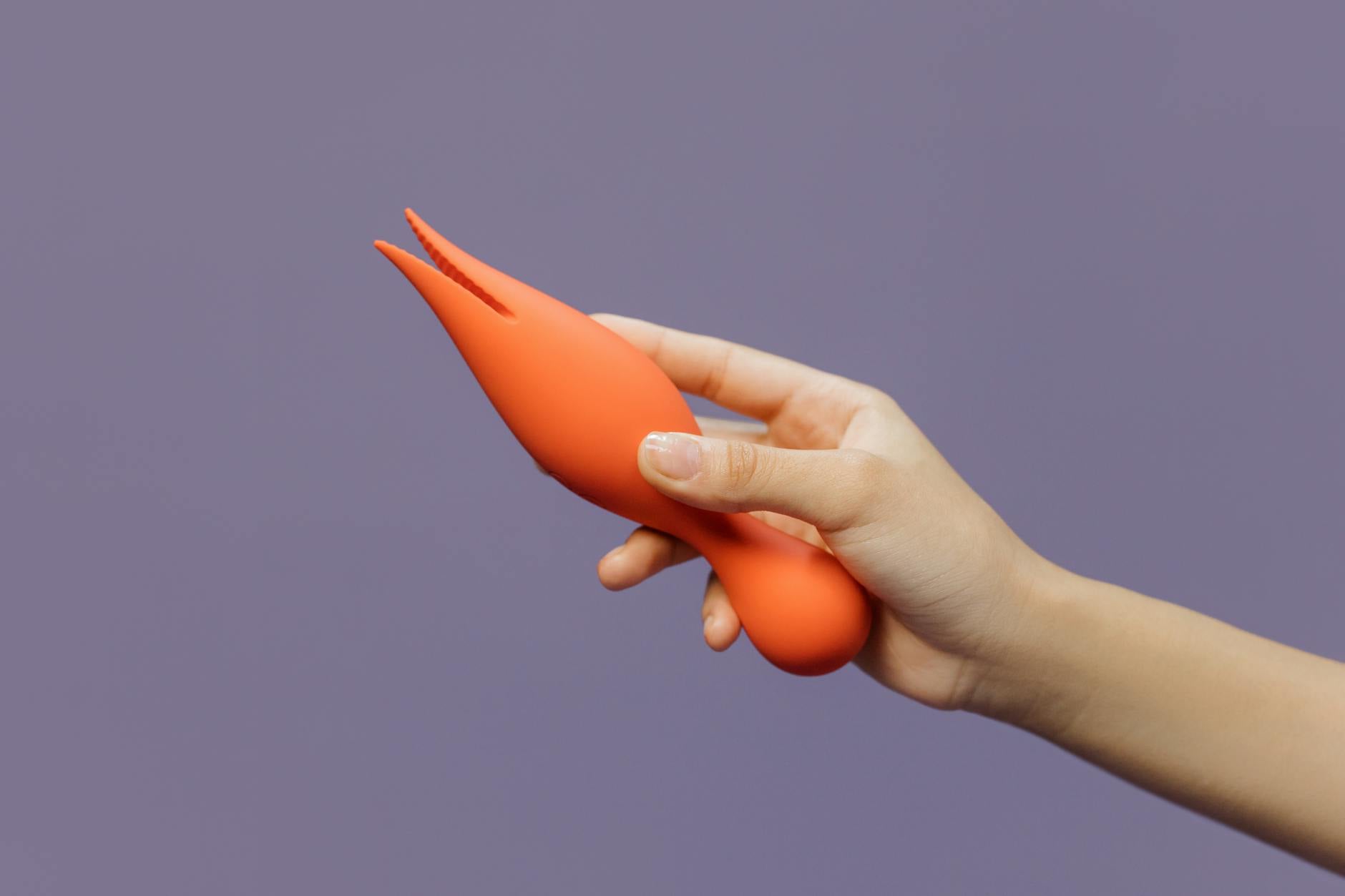
The guilt is not about the vibrator
Let's be real. If you're asking this question, the issue isn't the lemon vibrator itself. It's the voice in your head that says solo pleasure somehow betrays your partner, wastes time, or means something is broken in your relationship. That voice is loud and it's wrong.
I work with couples every week who've internalized the belief that good sex is partnered sex, and that anything else is consolation. It's not. Solo pleasure is not a Band-Aid for a relationship problem. It's a skill. And it's one of the most valuable things you can cultivate for both yourself and your partnership.
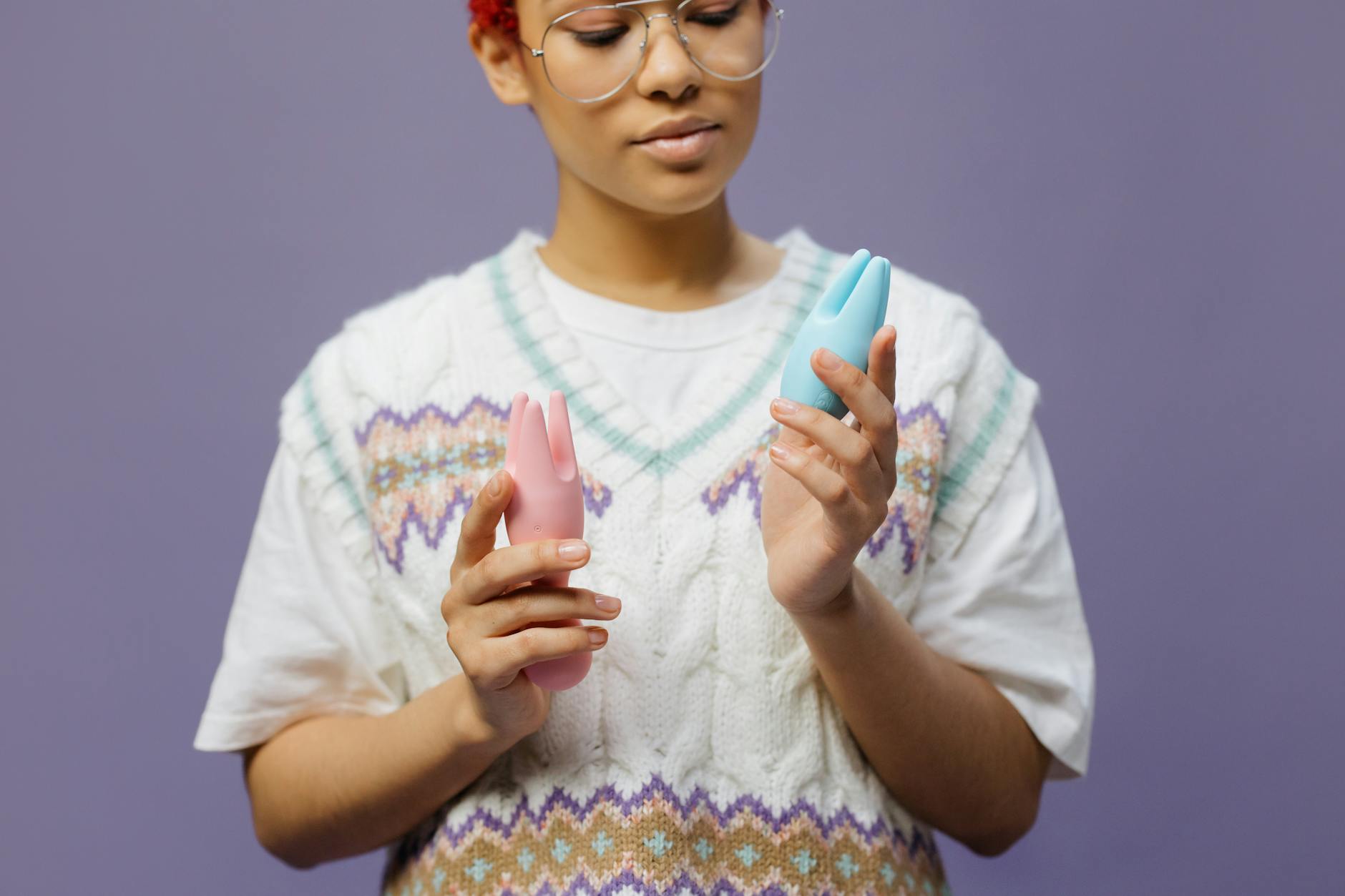
Photo by cottonbro studio on Pexels
Why solo exploration actually strengthens your relationship
Here's what I've observed in over two decades of couples work. Partners who have a rich solo pleasure practice are more confident, more communicative about desire, and paradoxically more satisfied in partnered sex. Why? Because they know their own body. They know what feels good, at what pace, with what rhythm. That knowledge is power.
When you use a lemon vibrator or any clitoral vibrator alone, you're doing research on yourself. You're learning your pleasure map. That information makes you a better partner. Instead of waiting for your partner to guess what works, you can say "I respond really well to this pattern" or "I need more time to warm up." That's not rejection. That's partnership.
The air-suction technology in lemon vibrators like the Lem is especially good for this kind of exploration because the sensation is distinctly different from partnered touch. You can discover things about your body that might not emerge any other way. You can find your own rhythm without syncing to someone else's. And honestly, that freedom is where a lot of people find their most intense pleasure.
The neuroscience of solo confidence
When you orgasm alone with a vibrator you chose, your brain is processing several things at once. There's the physical stimulus. There's the mental relaxation of knowing you're not managing anyone else's experience. And there's the dopamine reward of self-directed pleasure. That last one matters more than most people realize.
Partners sometimes worry that if their person is satisfied alone, they'll become less interested in partnered sex. That's not how brains work. Solo pleasure and partnered pleasure light up different neural pathways. They're not in competition. A person who regularly experiences both has more access to pleasure overall, not less. Their nervous system is more flexible. They know how to receive sensation and also how to direct it. Both are skills.
Why a lemon vibrator specifically
If you're exploring solo pleasure for the first time, or returning to it after a long time, a lemon clitoral vibrator changes the game. The suction mechanism is gentler than traditional vibration at lower intensities, which means you can spend more time in the exploration phase without things getting overwhelming. You can adjust sensation up or down in single increments instead of choosing between "barely there" and "intense."
That control is especially important when you're learning your own body. You're not rushing toward an outcome. You're discovering what each sensation feels like, what rhythm you naturally want to match, whether you prefer direct stimulation or indirect. Those details matter. A lemon vibrator gives you that flexibility.
The logistics of privacy and permission
Let's talk about the practical stuff, because guilt often hides in logistics. You need privacy and you need to give yourself permission to take it.
If you're in a shared living space, privacy is harder. It's also more important. You deserve 20 minutes that are just for you. That's not decadent. That's maintenance. If you share a home with a partner, talk about it directly. "I'm going to spend some time alone with myself on Tuesday evenings." That's not coded language. It's just true. Most partners respect this immediately once they hear it said plainly. The secrecy is what creates tension.
If you have kids in the home, solo time becomes even more precious. A locked door, headphones, a clear boundary. You're modeling something important for them: that adults have interior lives, that self-care is not selfish, that your own pleasure matters. Your kids don't need to know the specifics, but they benefit from seeing you claim time for yourself without guilt.
Permission is the other half. You don't need your partner's approval to use a lemon vibrator alone. You also don't need to hide it. If this is new for you, the discomfort you feel is about internalized messages, not reality. The reality is that your pleasure belongs to you.
When to tell your partner, and what to say
I recommend openness, but I know that's terrifying for some people. If you're in a relationship where sex talk is already easy, bring this up the same way you'd bring up anything else. "I've been thinking about exploring solo with a vibrator. I'd like your support with that." Most partners say yes immediately. Some need time. Some need reassurance that this doesn't mean anything is wrong.
If sex talk is difficult in your relationship, solo exploration can be a bridge. You don't have to announce it. But if your partner finds your lemon vibrator, you'll want to have already thought through what you'd say. The conversation matters more than the object.
What you might say: "I wanted to learn more about what feels good for me so I can be clearer with you about what I enjoy." That's true and it's relationship-oriented. It positions solo pleasure as something that serves the partnership, because it does.
The pleasure that comes after
Here's what most people don't talk about. The hours after solo pleasure, when you're relaxed and grounded, you often feel more affectionate, more present, more interested in your partner. That's not guilt talking. That's your nervous system in a settled state. You have more to give when your own cup is full.
When partners understand this, they often start encouraging solo time. I've had couples tell me that they actively protect this time for each other because they notice the difference. Better mood, better sex, better communication. All from one person taking 20 minutes to explore their own body with a vibrator they chose.
Choosing the right vibrator for solo exploration
If you're new to this, you want something intuitive and forgiving. A lemon vibrator or similar clitoral vibrator with multiple intensity levels lets you start low and build gradually. You're not in a rush. You have nowhere to be but with yourself.
Consider starting with patterns rather than straight vibration if you're sensitive. Air-suction technology in devices like the Lem gives you more gradual stimulation. If you're exploring for the first time in a while, this gentler approach helps you reconnect with sensation without overwhelming yourself.
Feel the texture too. Some people prefer smooth silicone. Some prefer a firmer material. There's no right answer. Just take your time feeling what's comfortable against your skin.
The permission you actually need
Your body was designed to feel pleasure. That's not sinful. It's not selfish. It's biology. Solo pleasure is not a test of your commitment to your partner. It's not cheating. It's not compensation for a weak relationship. It's just you, your body, and something that feels good.
If you have a partner, you're not taking anything from them by exploring alone. You're adding to your own capacity for sensation and your understanding of what you like. You're becoming a more confident, more self-aware person. That benefits everyone.
The guilt you feel is learned. It can be unlearned. Start by saying out loud, to yourself: "My pleasure matters. My body deserves attention. Solo exploration is not wrong." Then pick a time, create privacy, and give yourself permission to find out what feels good.
People also ask
Is using a lemon vibrator alone bad for your relationship?
No. Solo pleasure is not a relationship threat. In fact, partners who understand their own bodies are often more satisfied in partnered sex because they know how to communicate about desire. A lemon clitoral vibrator gives you information about yourself that makes you a better communicator with your partner. The most common pattern I see is that solo exploration improves partnered intimacy, not the reverse.
How often should you use a lemon vibrator alone?
There's no "should." Use it whenever you want, as often as you want. Some people explore solo daily, others weekly, others monthly. There's no frequency that's wrong. What matters is that you're listening to your own desire and responding to it without judgment. Your body will tell you what it needs.
Will solo pleasure with a lemon vibrator make partnered sex less interesting?
No. Solo and partnered pleasure use different parts of your brain and body. Solo exploration is self-directed and focused entirely on your sensation. Partnered sex involves connection, synchronization, and the pleasure of being desired by someone else. They're complementary, not competitive. People who regularly experience both often report that each one feels richer.
Should you tell your partner you're using a lemon vibrator alone?
Openness is healthy, but only if you feel safe. If you're in a relationship where communication is good and non-judgmental, honesty strengthens things. If you're worried about judgment or rejection, consider talking to a couples therapist first. A professional can help you have the conversation in a way that feels safe. But ultimately, your body and your pleasure belong to you, and you deserve privacy for this.
Can you use a lemon vibrator alone if you're single?
Absolutely. Solo pleasure is equally important whether you're partnered or single. In fact, many single people find that exploring their own body with a vibrator like the Lem helps them understand what they want to experience with a future partner, if that matters to them. You don't need relationship permission for self-pleasure. You just need permission from yourself.
What's the difference between using a lemon vibrator alone and with a partner?
The sensation is similar, but the experience is totally different. Alone, you're entirely in charge. Tempo, intensity, when to pause and when to continue. With a partner, you're syncing and receiving. One isn't better. They're different flavors of pleasure. Having access to both is ideal.